

- 362 Views
- 6 Min Read
- (0) Comment
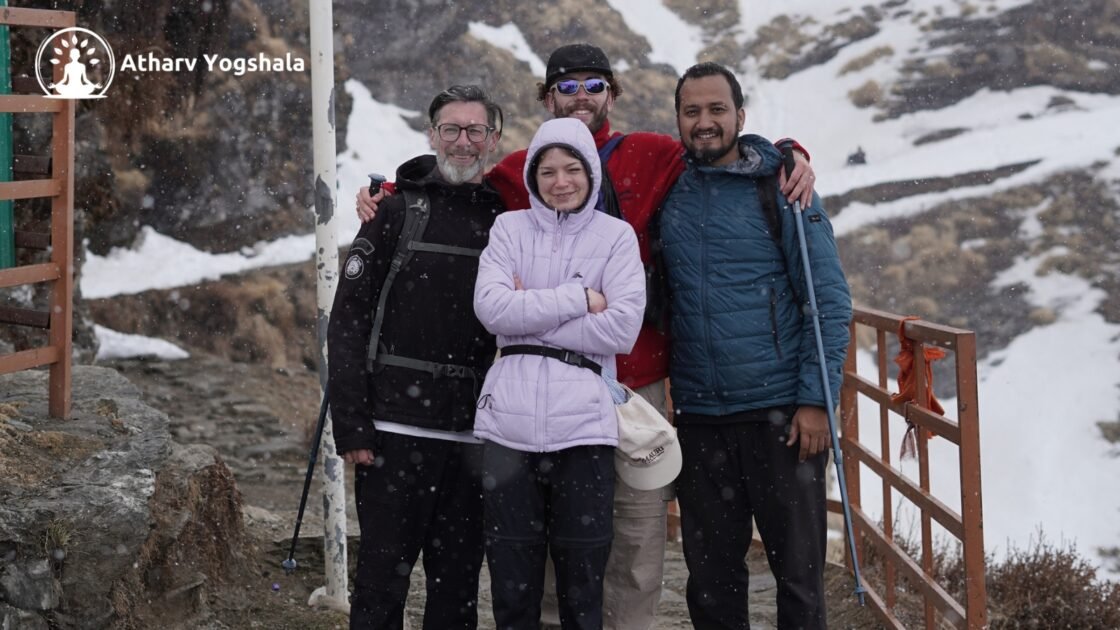
We all have hearts for the mountains, but what actually do we know about them? They are not just the mountains that consist of rocks and ice, but they are the dream places for many with the energy and vibration, loved by hikers. No matter where you are standing, whether at the top at 12,000 feet or at the very bottom, you will be able to hear your breath clearly. Here the process of the “Om” mantra starts with many seekers.
In Atharv Yogshala, we think yoga is not the one tied in a mat. It is in the swing of your feet upon the footpath and the echo of your voice on the mountain walls. We delve into the science behind the divine sound of Om and why no other place can be more conducive to this practice (Om) than the mystic trails of the Garhwal Himalayas.
The Gateway to Silence: Tungnath Temple.
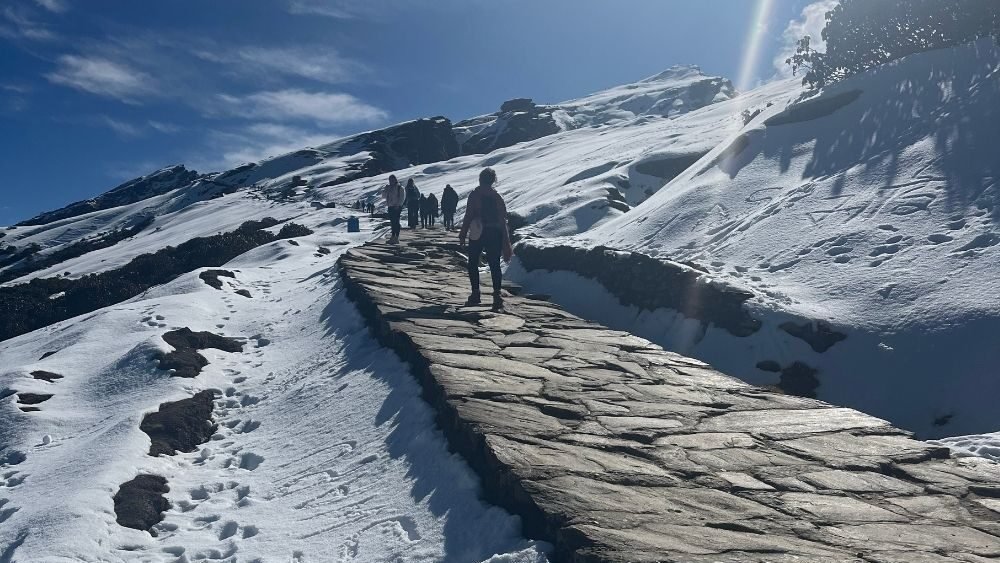
We have to know the geography of the areas where these sounds have the greatest power, and then we come down to the vibration of Om. Tungnath Temple is the largest Shiva temple on earth. It is located in the Rudraprayag district of Uttarakhand, and it is located at an altitude of approximately 3,680 meters (12,073 ft).
History and Geography
Tungnath is a highly frequented temple of Shiva in the state of Uttarakhand, which is also found in Panch Kedar. It has a tale behind this beautiful ancient temple, as it was constructed by the Pandavas, who were seeking the forgiveness of the Lord Shiva, who was not willing to see or forgive them, so he had camouflaged himself as a bull. His body parts were found back five times. His Bahu (arms) is reported to have manifested himself here at Tungnath.
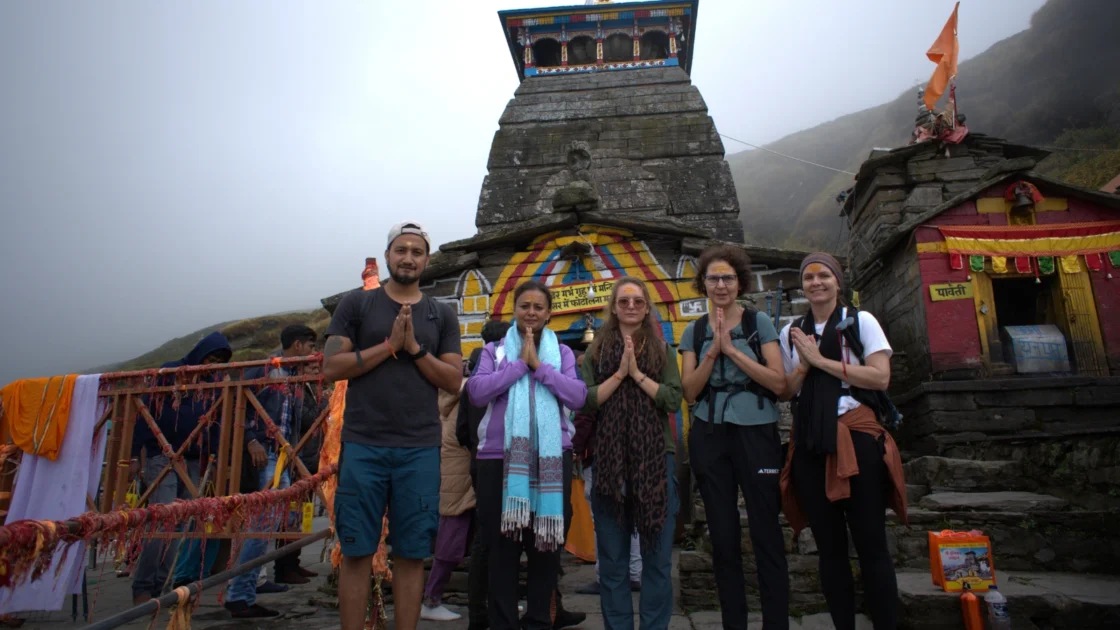
When we talk about the geographical part of this temple, then its trek usually begins with Chopta District, also known or famous by the name “mini Switzerland,” and is also hidden beneath the famous Chandrashila peak.
Why People Meditate Here
Why should thousands of yogis walk to such a height in order to meditate?
- Low Noise Pollution: At this level, it becomes possible to forget the “white noise of civilization.
- Magnetic Energy: Ancient books indicate that these mountains are energy vortexes.
- Thin Air, Sharp Focus: The reduced amount of oxygen demanded makes you be more aware of your breathing, and this is the premise of Pranayama.
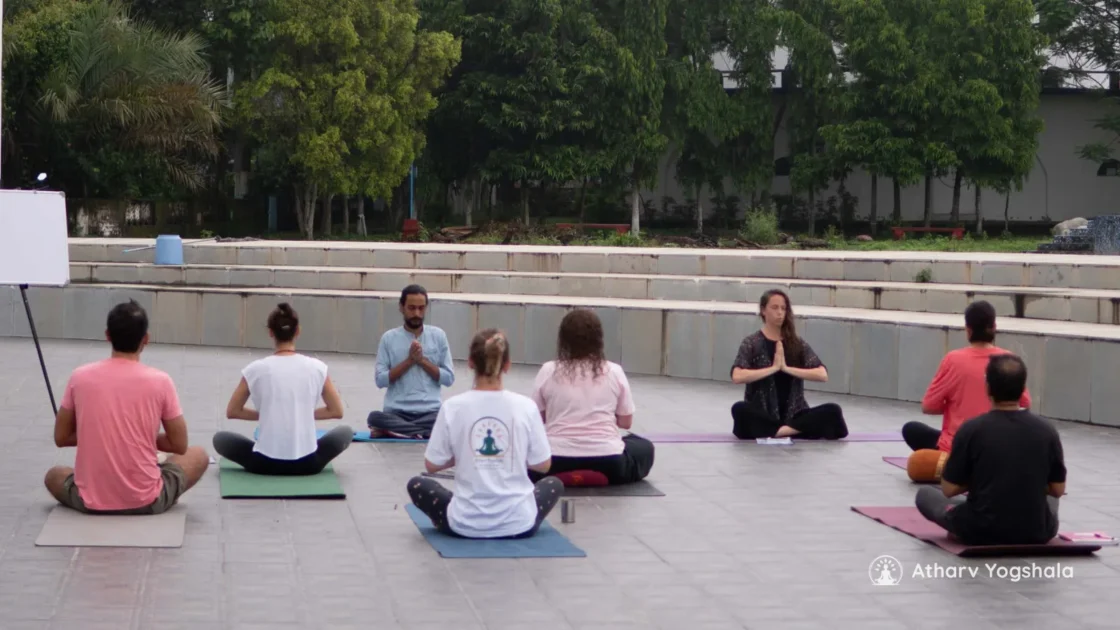
As you recite the Om sitting on the snow-capped mountains on the steps of Tungnath, the sound does not just fade away but reverberates in the valley as your inner frequency resonates with nature.
The Science of Om (AUM)
Whereas others perceive “Om” to be a religious sign, science perceives it to be a frequency. All things in this world are vibrating, and Om is believed to be the primordial vibration.
1. The Vagus Nerve Stimulation
Studies carried out in different neurological journals have indicated that chanting of “om” produces vibration, and this vibration activates the vagus nerve. It is the roadway of your parasympathetic nervous system. The only easy way you can make your body relax and go into the state of relaxation is by slowing your heart rate and taking deep breaths for as long as possible.
2. The Sound Frequency (10 Hz)
The Om chanting usually results in a frequency of an average of 10 Hz. This frequency is recognized to cause a state of relaxation and alertness of the mind. It changes the brain from the panicked beta waves (stress) to the cooler alpha waves (relaxation).
3. Physical Resonance
The mantra is a complex of three sounds, in fact: A-U-M.
- A kara (A-kar): Here, the vibration is in the chest and abdomen. It decongests the digestive tract and the lower lungs.
- U (U-kara): throat vibration, chest vibration. It has an advantageous effect on the respiratory system and thyroid.
- M (Ma-kara): Shaking in the head. This is useful in soothing the mind and enhancing memory.
How to Chant Om Correctly
In order to enjoy the best out of your practice, particularly when you are hiking with us at Atharv Yogshala, consider the following steps:
- Find your seat: You have a straight spine. When you are in a high-altitude location such as Chandrashila Peak, then sit back to the sun.
- Deep Breath: Breathe in deeply with the diaphragm.
- Sound A: Open your mouth and begin with Aaa. Feel it in your navel.
- The U Sound: This is the “close your lips and make an ‘ooo’ sound.” You can feel the vibration go through your chest.
- The /M/ Sound: Keep your lips shut, and say Mmm. Allow the buzzing of the bee to play upon your head.
- The Silence: It is the most significant section. Sit quietly in a few seconds after the M. It is the Anahata (the unstruck sound).
Linking the Himalayan Dots.
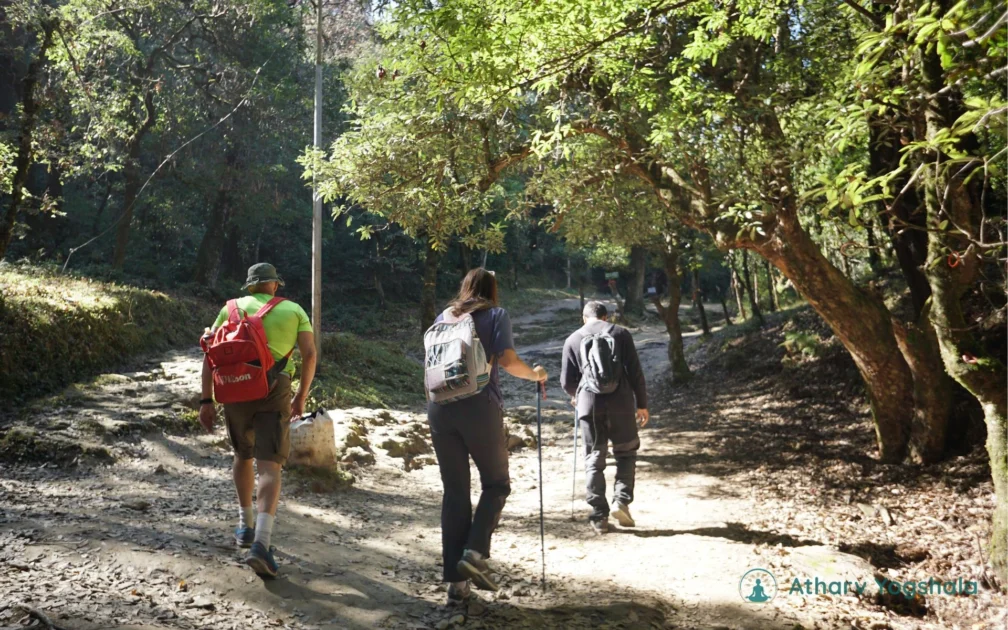
The direction leading to Tungnath and the practice of Om belong to a bigger spiritual map. It is not just to one mountain that we take our students on the Himalayan Yoga Hiking Retreat, but to a topography of high-frequency energy.
Our trip begins from the Devprayag Sangam; before reaching the Tungnath directly, we have to go through the sangam. This is the exact place where two rivers named Alaknanda and Bhagirathi meet and form Ganga.
We proceed further into the mountains, where we visit the Dhari Devi Temple. The energy here is fierce and grounding and is called the guardian deity of Uttarakhand and is the best energy to prepare the mind for the silence of the higher peaks.
The trek is further extended to Chandrashila Peak to see the sun rise above the Himalayas for those who wish to do so. Singing Om in the morning at sunrise and having a 360-degree view of Nanda Devi, Trishul, and Chaukhamba are the experiences that can be described only with words. It is one of those times that science and spirit merge.
We also visit the calm waters of the Deoria Tal, a lake where the Chaukhamba peaks are mirrored. The practice of Om here is useful in attaining the aura of a mirror-like clarity of mind. And to those whose flesh needs less clothing, the walk to Kartik Swami has a ridgeline prospect that makes one feel that he or she is walking in the sky.
The trip does not stop in the mountains. We finally come down to the plains of Rishikesh in order to observe the Ganga Aarti. The bells, the lamps, and the group chanting of the Om in the Aarti serve as a grounding ritual, which unites all the high energy that we have accumulated in the hike.
Conclusion: Why Hike and Meditate?
You would say, “But can I not chant Om in my room? You can. But the impact is different.
Our Himalayan Yoga Hiking Retreat at Atharv Yogshala will help make you undergo this change. We subject our students to the physical task of hiking, the history of ancient temples, and the profound science of yogic recitation.
When you find yourself at the Devprayag Sangam or even when you observe the Ganga Aarti, you cease being a tourist. You are an executor and have experienced the shiver of the universe in your body.
Join us on our next trek. Be the mountains, and be the Om, and the silence and the sound, and so forth.
Ready to vibrate higher? Visit our retreats in the future, and we will hike into the soul.
Yoga Teacher Training Courses in Rishikesh
100 Hour Yoga Teacher Training in Rishikesh
200 Hour Yoga Teacher Training in Rishikesh

300 Hour Yoga Teacher Training in Rishikesh



Leave a comment: