
- 2.7k Views
- 6 Min Read
- (0) Comment
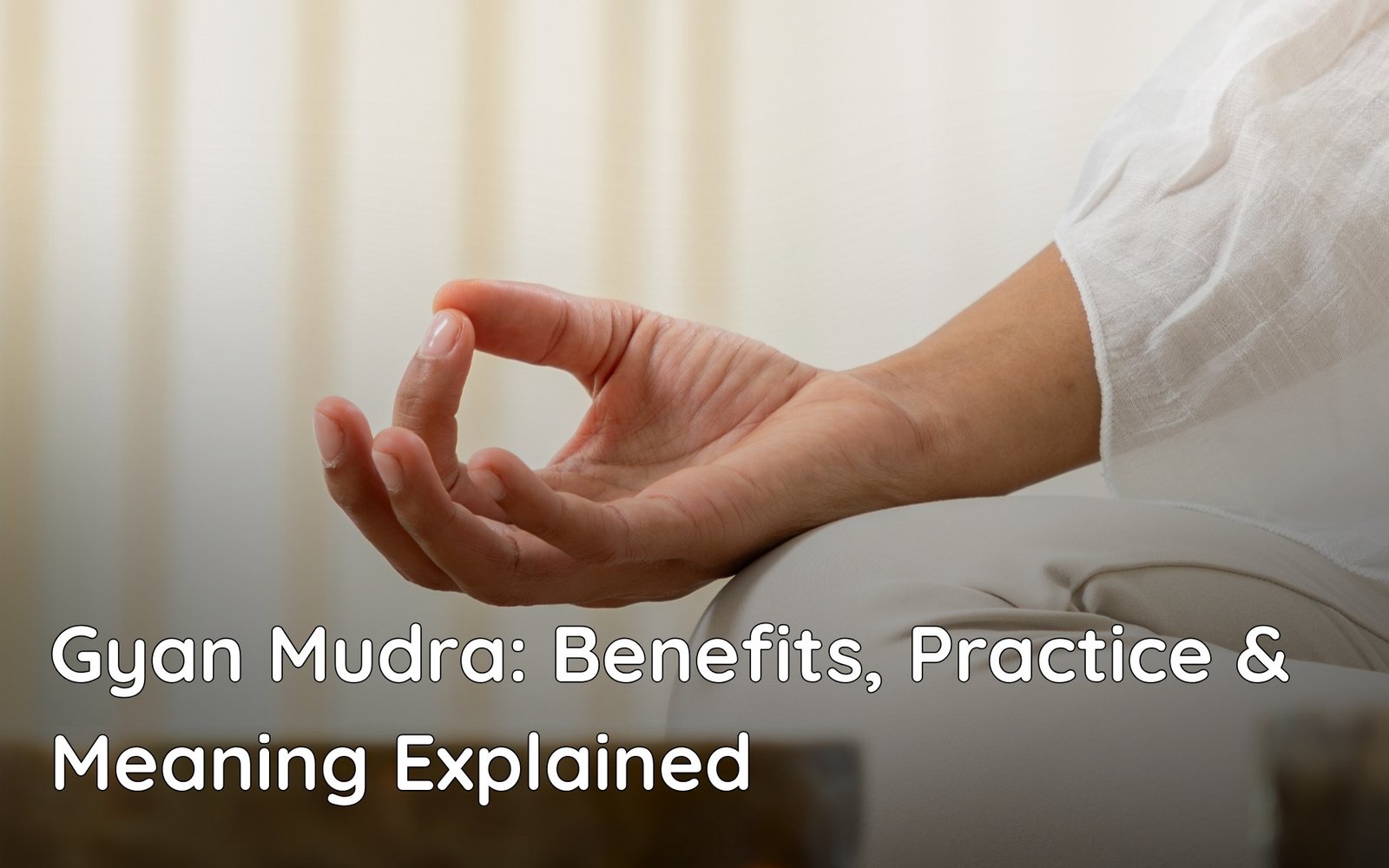
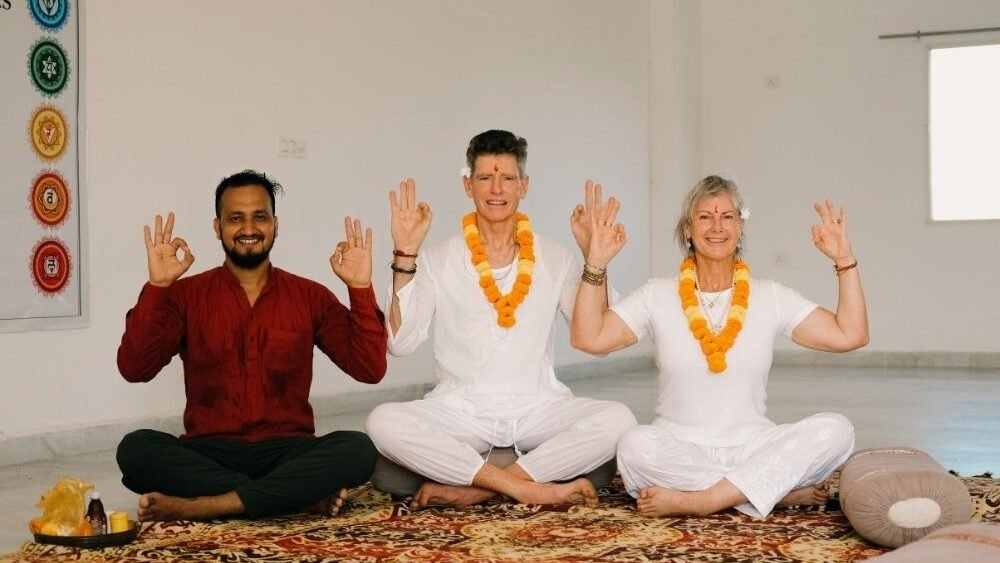
Yoga is not merely the bending of the body on a rubber mat. You, having ever given a look at the statue of Buddha or a wandering monk in the Himalayas, must have observed their hands. The thumb and the index finger are circling on most occasions. This is not a cool pose; it is Gyan Mudra, which is also known as the Mudra of Knowledge.
During our Himalayan Yoga Retreat (and Himalayan Yoga Hiking Retreat) at Atharv Yogshala, we make it a point to stress how even minor actions can cause the greatest changes to be experienced internally. One of the most commonly used hand gestures in the world happens to be Gyan Mudra, but very few individuals know the reasons behind the effectiveness of this technique and how it can be performed.
We will deconstruct everything you need to know about Gyan Mudra in a point-to-point manner in this blog.
What Exactly Is Gyan Mudra?
Gyan (or Jnan) is the Sanskrit word that can be translated to mean “wisdom” or “knowledge,” and mudra is the Sanskrit word that can be translated to mean “seal” or “gesture.”
These five fingers are representative of the five elements of Ayurvedic science:
- Thumb: Fire (Agni)
- Index Finger: Air (Vayu)
- Middle Finger: Ether (Akasha)
- Ring Finger: Earth (Prithvi)
- Little Finger: Water (Jal)
By touching the index finger (Air) with the thumb (Fire), you are basically burning away the restlessness of mind and forming an energy flow that will hold your mind focused inward.
An Instructional Guide on How to Do Gyan Mudra.
You do not require special equipment to do so. You can do it when you are sitting on a chair, but to do it best of all, you can do it in the following steps:
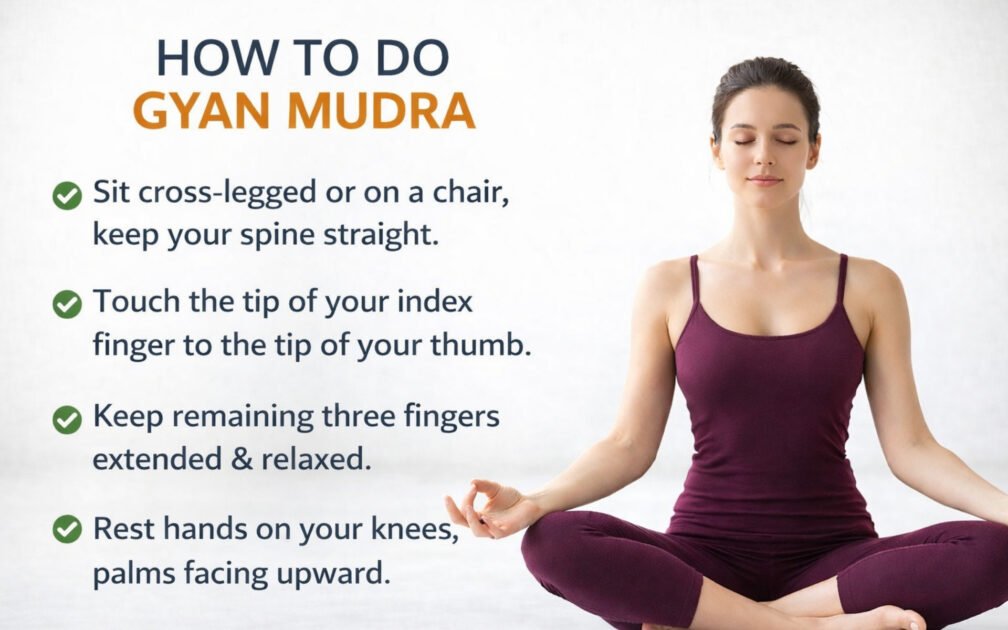
- Seek a Sweet Place: Sit in a relaxed meditative posture. The best one is Padmasana (Lotus Pose) or Sukhasana (Easy Cross-legged Pose).
- Keep Your Back Straight: This is highly essential. Your vitality must have a definite course to run up your spine.
- Hands: Your hands should be on your knees and the palms up.
- The Touch: Fold the index finger so that you are going to have the index finger ending up touching the point of the thumb.
- Keep Other Fingers Straight: The other 3 fingers (middle, ring, and pinky) are to be straight and loose and not stiff.
- Gentle Pressure: Do not press. The stroke must be slight, not too much so as to miss the pulse.
- Close Your Eyes: Make slow, deep breaths. Be interested in where the fingers intersect or on your third eye (in between eyebrows).
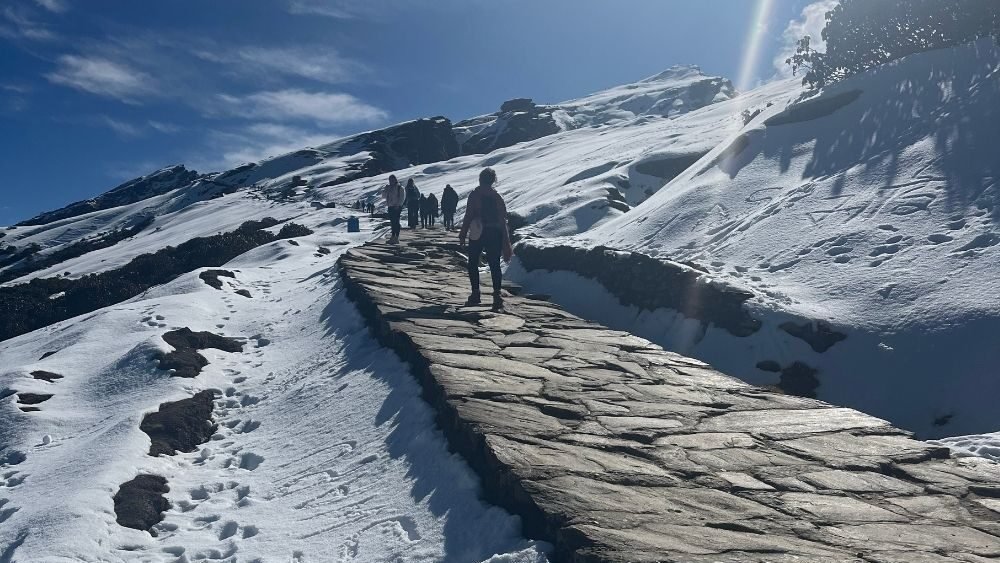
- Pro Tip: In case you are doing this during a trek (say, as you head to visit the Chandrashila Peak), you can even do it during a walk or a rest (to focus your mind) in a short time.
The Merits of Gyan Mudra Practice.
Why then should you worry about holding your fingers like that? The following are the cut-to-cut benefits:
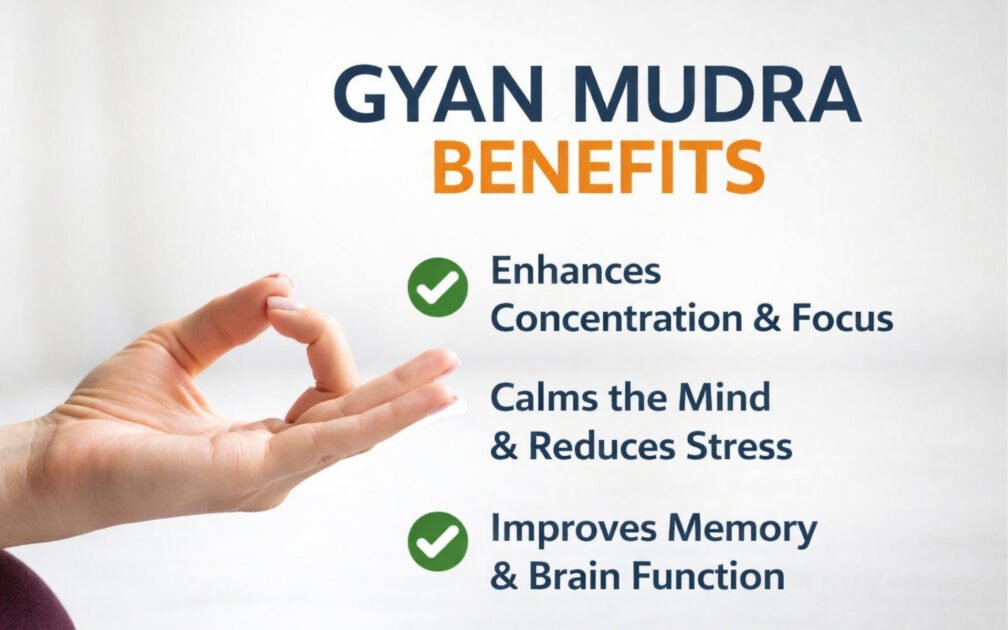
1. Stimulates Memory and Concentration.
This is the reason why it has been applied by students and academicians throughout the centuries. It increases the pituitary gland and endocrine system that make you focus on what needs to be done.
2. Reduces Stress and Anxiety
The fire and air elements are connected in order to stabilize the nervous system. It is a built-in relax button for your brain.
3. Cures Insomnia
You can also make use of Gyan Mudra in order to sleep better; that is, you can have 15-20 minutes of Gyan Mudra before going to bed, as this will help you to quiet the chatter in your mind, and therefore you will have a good sleep.
4. Spiritual Awakening
On the more subliminal plane, this mudra assists you in relating to your elevated self. It is the connection between the personal soul and the universal consciousness.
5. Manages Mental Disorders
It is known to be useful in depression, anger problems, and irritability. It introduces a feeling of Vairagya, or non-attachment to the needless concerns.
When and for how long?
- Ideal time: Early morning (Brahma Muhurta) is the best, provided you are in a spiritual energy center such as the Devprayag Sangam, the point of two rivers, Alaknanda and Bhagirathi.
- Time: As a beginner, one should begin with 10-15 minutes. Actual physiological changes can be observed in trying to achieve 45 minutes daily (this can be divided into three 15-minute sessions).
Yoga: A Journey on the Road.
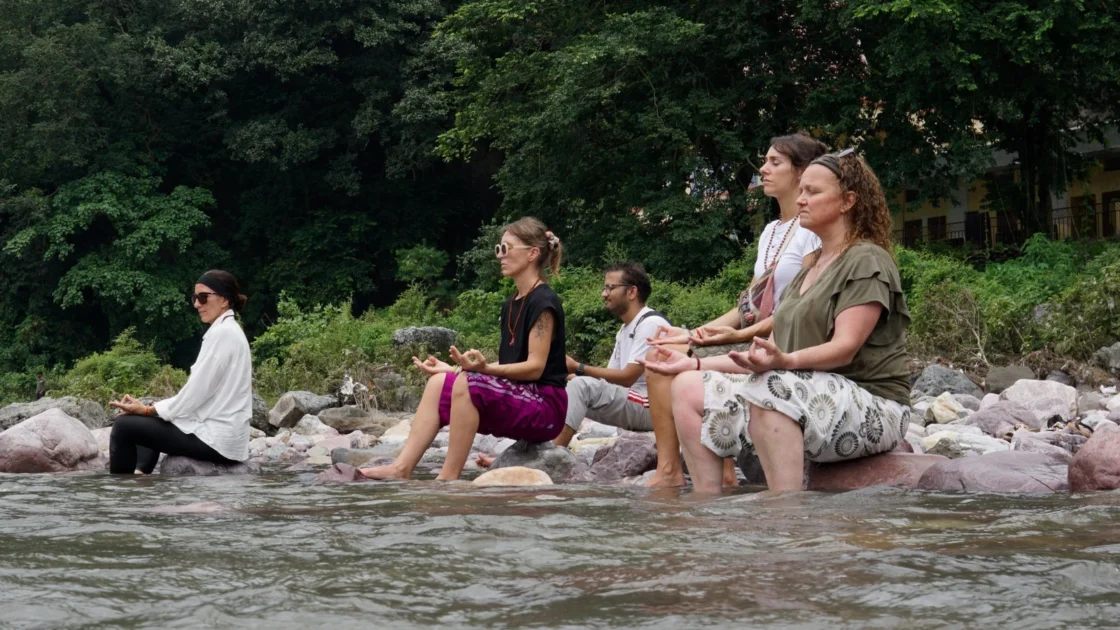
He might do Gyan Mudra in a room, and that would be good, but in the lap of the Himalayas, that will be life-changing.
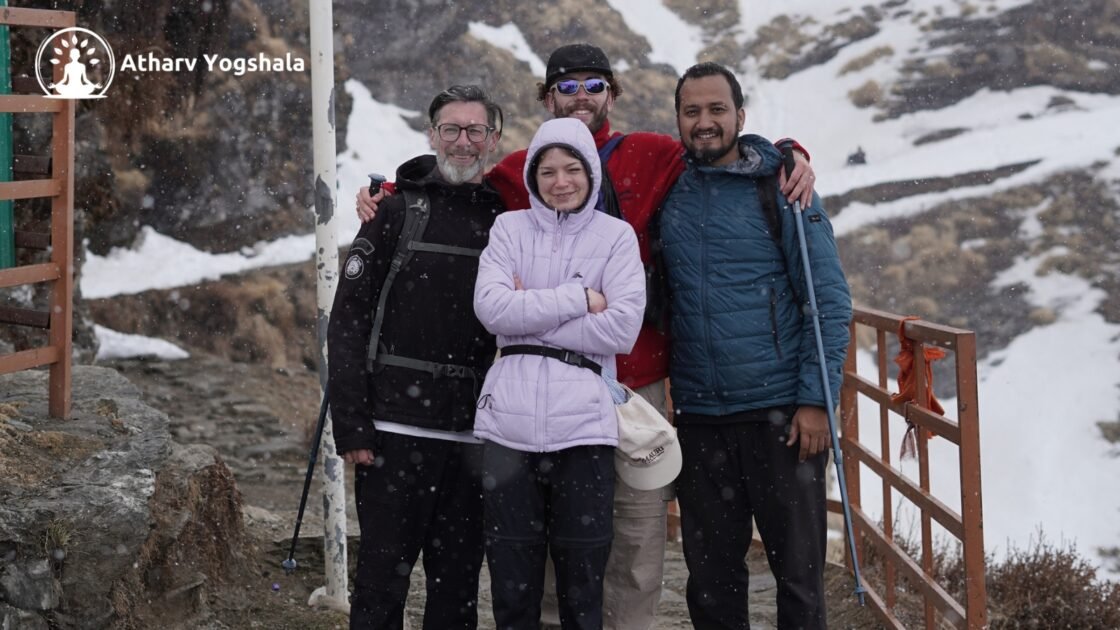
When you take us on the Himalayan Yoga Hiking Retreat with our students, we do not go hiking; we meditate. Imagine that you are sitting on the edge of Deoria Tal, where the water and hills are located in the background of the picture of the Chaukhamba in the crystal-white water, and with Gyan Mudra. The quietness of the lake and the strength of the mudra are the factors that help to provide you with the kind of peace that is not attainable in your city life.
Connecting the Dots: A Spiritual Journey.
Yoga is connected with everything we possess in the world, the surrounding environment, the past, and the life of the earth.
Each place you go to in Uttarakhand contributes to your practice:
- Ganga Aarti: Being at the Ganga Aarti in Rishikesh will make you see the aspect of fire (which is your thumb in the mudra).
- Dhari Devi Temple: This is a very old temple of the guardian of the Char Dham; by paying the veneration of this temple, you get the inner strength and force of Shakti to continue with your meditation.
- Devprayag Sangam: It is precisely the sight of a union between two great rivers, which is what Gyan Mudra symbolizes: the union of the self with the divine.
- The Treks: It can be the hike to the Chandrashila Peak or the stroll to Deoria Tal; these physical experiences train your body to take a seat in Gyan Mudra.
Conclusion
In order to sum everything up, Gyan Mudra is the easiest and, at the same time, the most important weapon of your yoga arsenal. It does not need flexibility, money, or even additional time—you can do it during a meditative session, during a trip to a place, or even at a sunset.
It’s about balance. Touching your thumb and index finger, you are balancing your inner fire with thoughts. This is the balance that we are seeking in Atharv Yogshala.
It is important to stop whether you are in search of the divine power in a Ganga Aarti, or seek blessings in the Dhari Devi Temple, or just stand on the top of the world at Chandrashila Peak. Close the eyes and sit down and shape Gyan Mudra.
You will not only find focus in that silence but also yourself.
This peace is what we want you to feel as we take you on our next Himalayan Yoga Hiking Retreat.
Keep it simple. Keep practicing.
Yoga Teacher Training Courses in Rishikesh
100 Hour Yoga Teacher Training in Rishikesh
200 Hour Yoga Teacher Training in Rishikesh
300 Hour Yoga Teacher Training in Rishikesh


Leave a comment: