
- 38 Views
- 7 Min Read
- (0) Comment
As you stand down the mountain at Garhwal Himalayas, the first thing you do not see is the height but the air. It is crisp, thin, and pure. We feel that yoga is not only done on a mat at Atharv Yogshala but also on the trails. Here we have a guide to the art of breathing (Pranayama) as seen as we come across our Himalayan Yoga Hiking Retreat, where the topography of a land collides with the science of the breath.
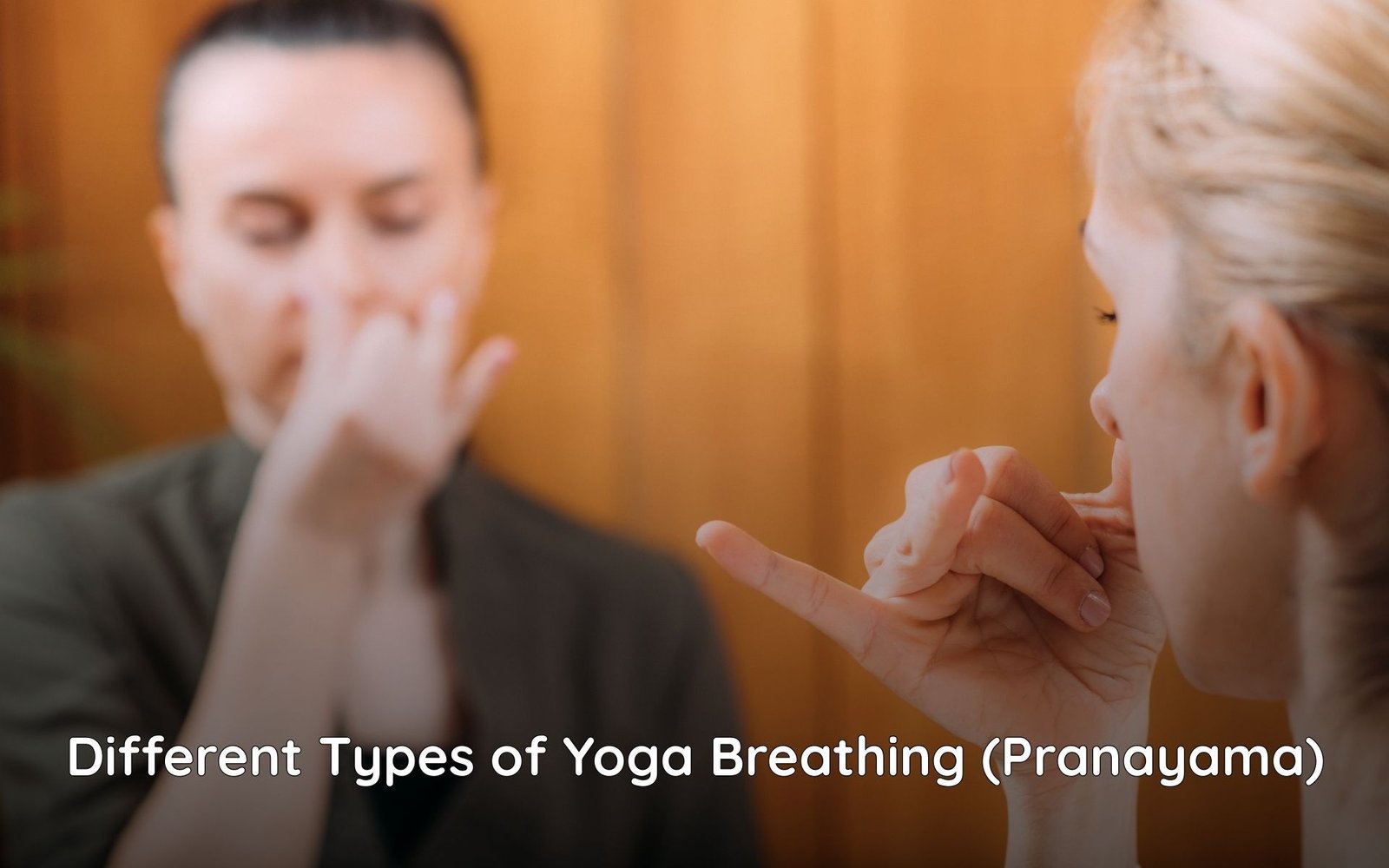
Different Types of Yoga Breathing (Pranayama)
Pranayama is not just a normal breathing style; it is an effective breathing technique that helps a human body in many ways and many areas no matter whether you are sitting in an office or hiking through the Himalayas.
What is Pranayama?
Pranayama is made up of two words, “prana,” which means “life force” or “breath,” and “ayama,” which means “control.”
All you are required to do is keep a sense of the way you are breathing. Our breath has all the power to either make you feel stressed or free of stress, so be sure you know how to use it effectively. So collectively it means controlling your breath; it works like a bridge or connection between your mind and body through breathing.
An important pranayama technique introduction.
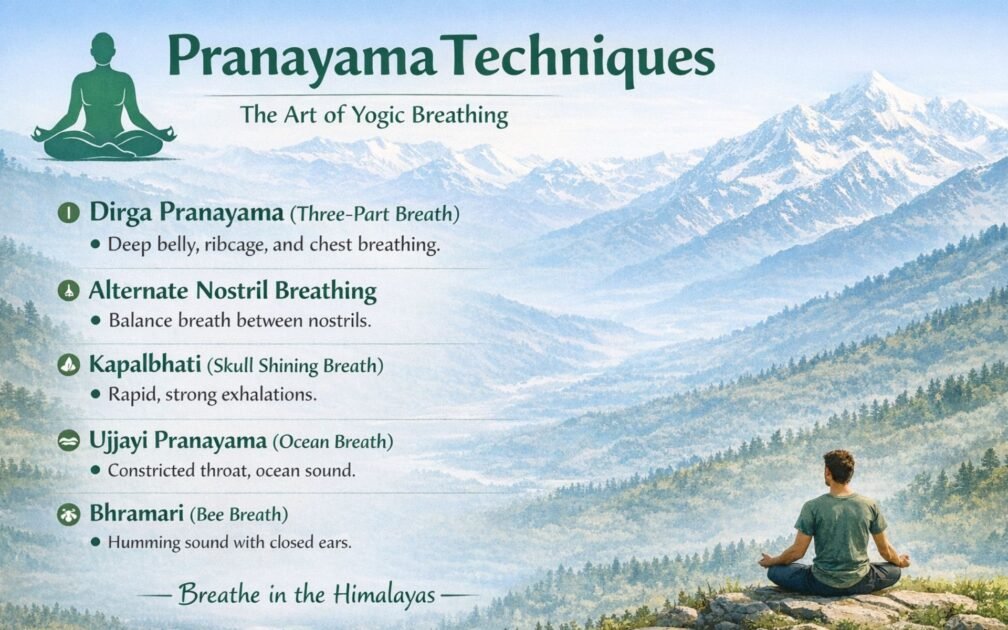
The following are the key methods we use in our retreats, in point-to-point:
1. Dirga Pranayama (Three-Part Breath)
This is the foundation.
- The way to do it: Breathe deeply through your belly, followed by your ribcage, and then through your chest, and exhale in the reverse pattern. Keep your breath slow and deep.
2. Alternate Nostril Breathing (Nadi Shodhana).
This is about balance.
- How it is done: As suggested by the name itself, it is about breathing in with one nostril and breathing out with the other and then repeating the process. During this, keep the one nostril closed by the thumb while breathing in and out from the other.
- Health Benefits: Helps in balancing both sides of our brain and relaxes the overall nervous system.
3. Kapalbhati (Skull Shining Breath)
This is a cleansing Kriya.
- How to do it: Powerful short exhales to the nose and drawing the navel inward. The breathing occurs automatically.
- Health Benefits: It makes the inside hot, and it clears the sinuses.
4. Ujjayi Pranayama (Triumphant Breath)
It is also known as the Ocean Breath.
- The trick: In breathing in through the nose, slightly constrict the throat in the back so that one can hear a soft whistling.
- Why hikers: It is the Pranayama, which you can practice when taking a walk. It keeps time of your footsteps with your heart, and going to Tungnath does not appear hard.
5. Bhramari (Bee Breath)
In this we breathe while making a sound like a bee; that’s why it is called bee breathing too. You have to close your ears with your thumbs and eyes with your fingers and then breathe out while making a humming sound.
- Health Benefit: You will feel a drastic drop in your stress and blood pressure immediately.
- The Connection: That is what we are inclined to do during the evenings after we have seen the Ganga Aarti: A Spiritual Evening That Lights Up the Soul. The sighing sound within is in synchronism with the vibration of the church bells.
The Breath Geography: Tungnath teachings.
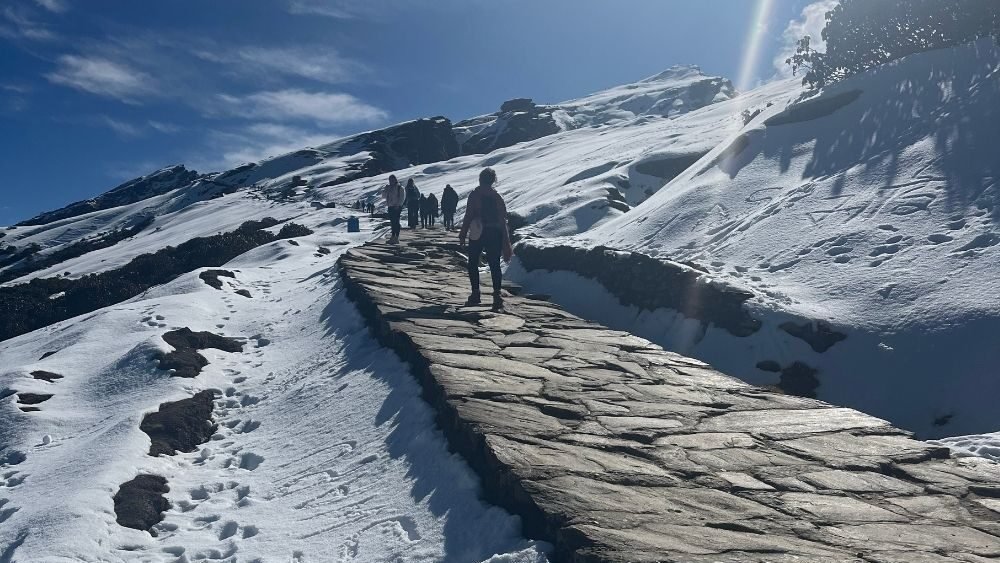
Pranayama is one concept that requires one to consider Tungnath Temple. Oxygen depletes with the geographic position during a hike between Chopta and Tungnath. Your heart goes round and round, and your lungs go round and round. Here the failure of “normal breathing” and the commencement of pranayama take place.
Tungnath is where people go to meditate since there is no form of silence there. But to be in meditation up so high, you need to control your breath.
The reason why to meditate in the Himalayas.
You may ask how we can go to such places like the high ridges of Uttarakhand or the Dhari Devi Temple to practice these techniques.
- The Vigor (Shakti): Dhari Devi is credited with being the protector of the Char Dham. These ancient shrines are a catalyst to your practice through the energy there.
- The Air Quality: The air here, unlike in the city, is full of prana. Each inhalation in the Pranayama at Deoria Tal is healing the cells at a more profound level.
- The Focus: When 7,000-meter mountains are around you, you forget about your inconsequential concerns of everyday life. Meditation is the ideal brush on this blank mind.
The experience of the journey: The Atharv interconnected.
These breathing methods are not exercises at Atharv Yogshala. We rely on them for survival and spiritual means.
In Atharva Yogshala, you will feel every spot from within as we begin our journey to breathing with Rishikesh, where you will experience the all-time favorite Ganga Aarti. And when we begin our trip to the mountains, you will be welcomed by Devprayag Sangam, which is also the birthplace of the river Ganga. This is the breath of commencement of our spiritual life.
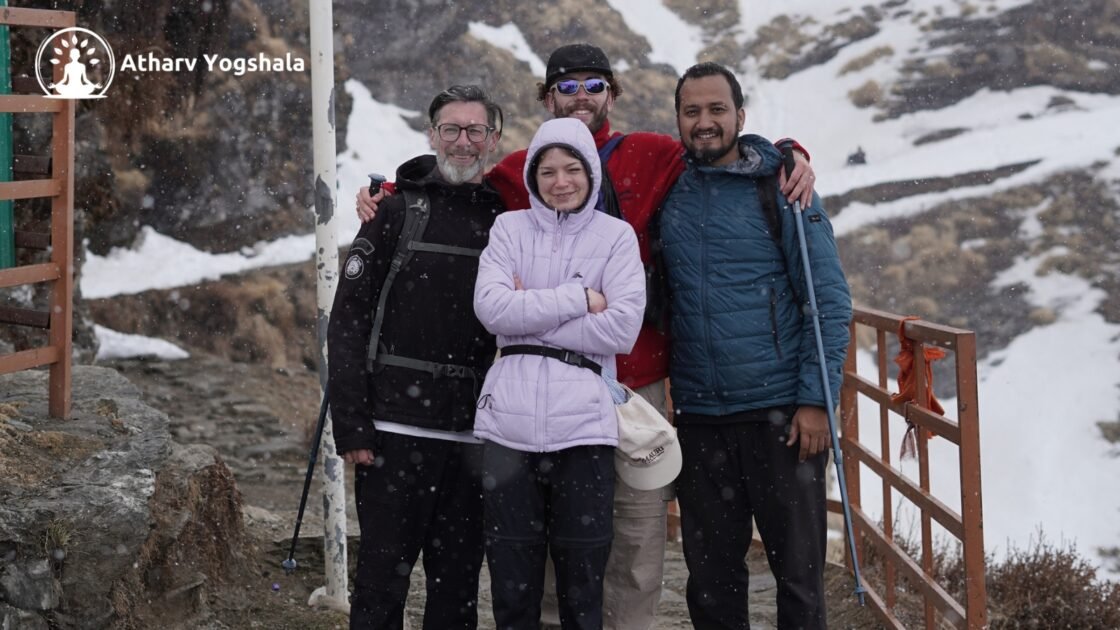
And then we bless ourselves in the Dhari Devi Temple before we get to the highlands, making sure that we have a steady mind. The higher the terrain becomes, the harder we breathe using Ujjayi and Dirga breathing to arrive at Tungnath and Chandrashila Peak. We sit here on the highest top of the world. The pranayama, which we did at a lower altitude, enabled us to sit in the thinned air with ease and to face out on the immensity of the Himalayas.
We also take our students to the meditative tracks of the Kartik Swami and the lakeside camp of Deoria Tal. The kind of pranayama varies in every one of these places. We inhale near the lake, in the breath of “stillness.” We breathe on the climb—on the climb—strength.
Conclusion
Yoga is the journey, not the place; it is the breathing as you head to the place. Be it in the streets of your motherland you are walking or in the topmost temple of the world, you are always accompanied by your breath.
When you hear the beckoning of the mountains and desire to hear the methods of this antiquity in which we believe they were first conceived, we come and ask you to come with us. We shall climb, inhale, and be in the shades of the mountains.
So are you all set to have a fresh start? Then what are you waiting for? Learn the amazing effects of breathing and its change in your life only with the Himalayan yoga hiking retreat.
Most Asked FAQs
1. What is Pranayama in Yoga?
Pranayama is a yogic breathing practice that focuses on controlling and regulating the breath. The word comes from two Sanskrit terms: “Prana” (life force or vital energy) and “Ayama” (expansion or control).
Pranayama breathing techniques help improve lung capacity, oxygen flow, and mental clarity, making it an essential part of traditional yoga practice.
2. What are the main benefits of Pranayama?
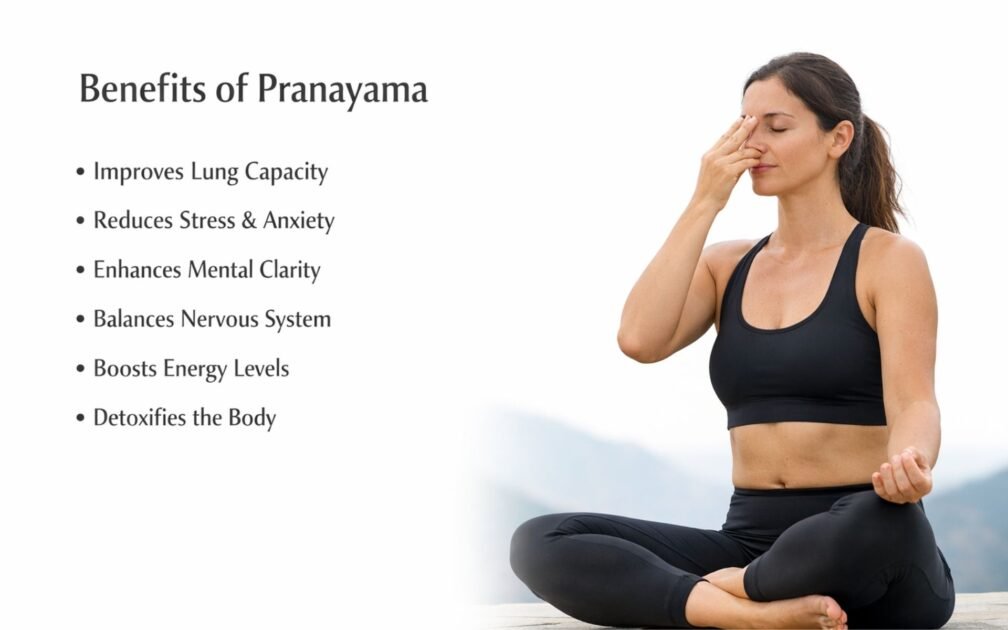
Practicing pranayama regularly offers many physical and mental benefits such as:
- Improves lung capacity and respiratory health
- Reduces stress and anxiety
- Enhances focus and concentration
- Balances the nervous system
- Increases energy and vitality
These benefits make pranayama one of the most powerful yoga breathing techniques for overall wellness.
3. Which are the most common Pranayama techniques?
Some of the most popular pranayama breathing techniques practiced in yoga include:
- Nadi Shodhana (Alternate Nostril Breathing)
- Kapalbhati (Skull Shining Breath)
- Bhramari (Bee Breath)
- Ujjayi Pranayama (Ocean Breath)
- Dirga Pranayama (Three-Part Breath)
Each technique helps improve breathing control, relaxation, and mindfulness.
4. How long should beginners practice Pranayama daily?
Beginners can start with 5–10 minutes of pranayama practice daily. As the body adapts to controlled breathing, the duration can gradually increase to 15–20 minutes per session. Practicing in a quiet and clean environment helps improve concentration and breathing rhythm.
5. Can Pranayama be practiced during yoga retreats in the Himalayas?
Yes, practicing pranayama in the Himalayan environment can be especially powerful. The fresh mountain air and peaceful surroundings help deepen breathing and enhance meditation. Many Himalayan yoga retreats in Rishikesh and Uttarakhand include daily pranayama sessions to improve physical health and spiritual awareness.
Yoga Teacher Training Courses in Rishikesh
100 Hour Yoga Teacher Training in Rishikesh
200 Hour Yoga Teacher Training in Rishikesh
300 Hour Yoga Teacher Training in Rishikesh



Leave a comment: