

- 226 Views
- 6 Min Read
- (0) Comment
Most people sit down to meditate, and within three minutes they’re planning dinner, replaying an argument, or wondering whether they left the gas on. That’s not a personal failing. Patanjali asserts that practice and non-attachment control the fluctuations of the mind. Vairagya, non-attachment, is one of the two pillars of yoga alongside abhyasa, sustained practice. Neither works without the other. Overcoming distractions in meditation is partly a matter of addressing these kleshas at the root, not just managing the surface symptoms.
Its desire in meditation is to do exactly what it does. Understanding why attachment disturbs meditation and what yogic philosophy says about it changes how you approach every session.
Why do Desires Arise During Meditation?
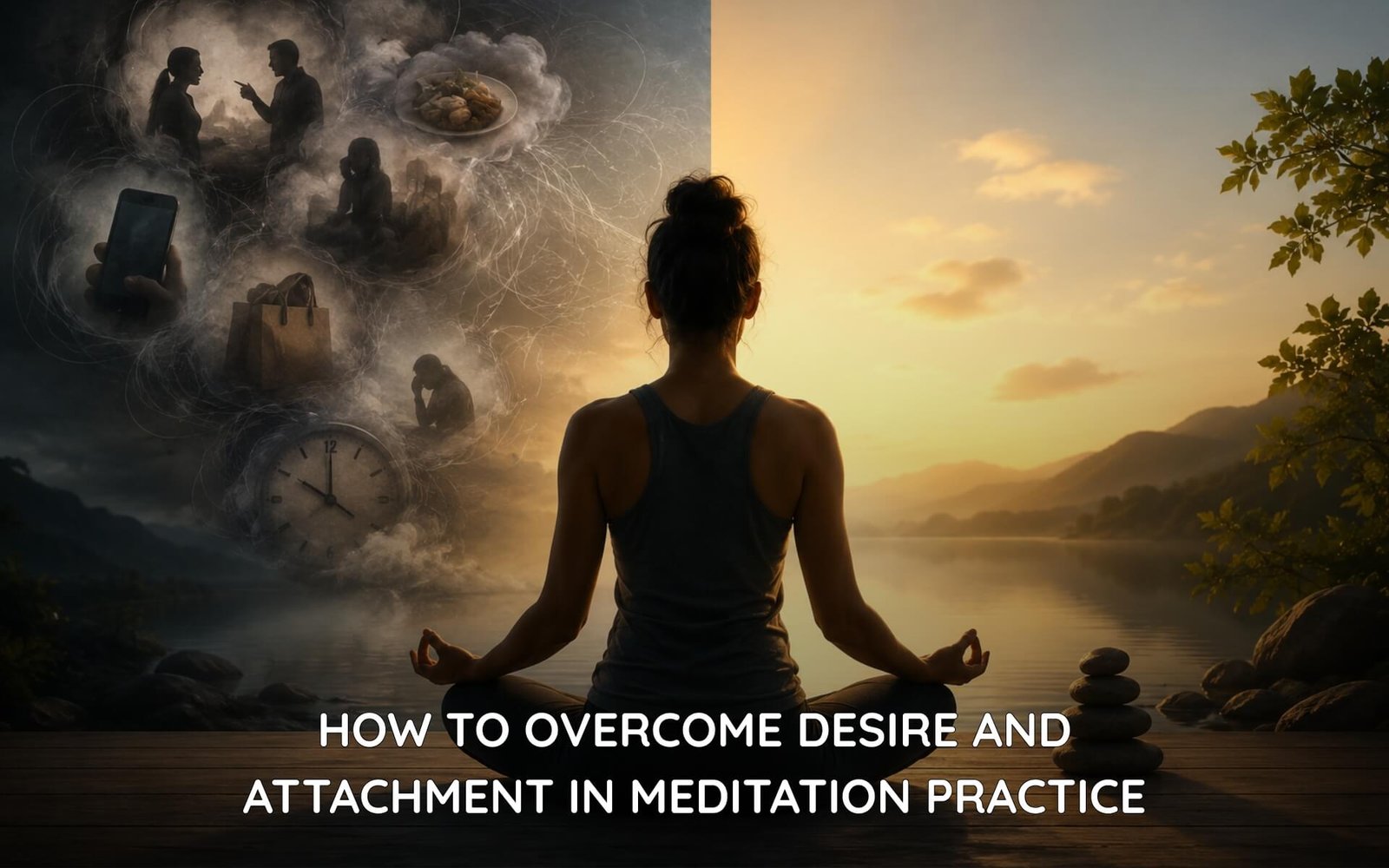
Sit still long enough, and the mind becomes loud. Desires don’t appear because you’re unsuccessful at meditating. They appear because you’ve removed every external distraction, and the mind fills the silence with its noise.
Desire in meditation is the mind’s default mode. Neuroscientists call it the default mode network, the brain’s activity when it’s not focused on a task. Meditators have known this phenomenon for centuries. Patanjali called these “vrittis,” mental fluctuations that obscure the self, like clouds obscure the sun.
The problem isn’t the thought itself. The problem is the chase. You notice a desire, mentally pursue it, and find yourself in a completely different place five minutes later.
What Attachment in Meditation Practice Actually Costs You?
Attachment in meditation practice works in two directions. You’re attached to pleasant experiences, wanting them to last. You’re also attached to the idea that meditation should feel a certain way. Both pull you out of presence.
The meditators who set outcome-based expectations reported significantly higher frustration and session dropout compared to those who approached sessions without a fixed goal. Attachment to the outcome is its own obstacle. Consider it this way. If you sit down expecting bliss and experience restlessness instead, you’ll fight the restlessness. That fight is attachment in action. The effects of attachment on meditation aren’t always obvious. It shows up as subtle disappointment and frustration.
Attachment to beneficial meditation states is itself a form of desire. You can get attached to experiences of stillness just as easily as to a cup of coffee.
Non-attachment in Yoga Philosophy: It’s Not What Most People Think
Non-attachment in yoga philosophy is commonly misread as indifference. Stop caring about things, stop wanting them, and sit still. That’s not it.
Non-attachment means you engage fully without clinging to the result. You meditate without demanding that meditation produce a specific feeling. You observe desire in meditation without feeding it or fighting it.
Chapter 3, verse 37, is even more direct. Krishna identifies desire as the great enemy born of the rajas quality. It clouds discernment. It drives action away from dharma. Desire in meditation is the same force, just operating in a quieter arena.
The Sanskrit term is vairagya, from the root vi-raga, meaning “without color” or “without passion in the sense of compulsive drive.” It doesn’t mean without feeling. Adi Shankaracharya described vairagya as the firm understanding that all transient experiences, pleasant or painful, are not worth chasing. That understanding is not cold. It’s clear-eyed.
How to Let Go of Desires in Meditation: Practical Steps
How to let go of desires in meditation isn’t a one-step answer. It’s a practice with a direction.
When a desire comes up, see it before you name it. The moment you label it “craving” or “distraction,” you’ve added a layer of judgment that itself becomes a new thought. Just see the impulse rise.
Breath, mantra, sensation. Not because returning is a victory, but because returning is practice. Controlling desires through mindfulness works through repetition, not force. Each returns the mind’s default setting.
Please consider this exercise: before each session, take sixty seconds to sit with whatever you currently desire. Acknowledge it. Then set it aside by setting a clear intention for the session. That act of acknowledgment reduces the pull.
Fourth, work with the body. Attachment often lives in tension. Tight shoulders, a clenched jaw, and a held breath. Release the body, which releases the grip.
Effects of Attachment on Meditation
The effects of attachment on meditation accumulate over time. Early sessions feel like battles. You’re fighting desire, frustrated by distractions, checking the timer. That’s attachment to the idea that this session should be different from what it is.
If you neglect to address attachment in your meditation practice over the course of months, you may reach a plateau. Sessions feel stable but shallow. You’re managing the surface. The deeper layers, where samadhi begins, stay locked because access requires releasing the grip.
Patanjali describes four stages of samapatti in Sutras 1.41 through 1.51. Each stage requires greater refinement of non-attachment. You can’t negotiate your way into the later stages while still demanding particular experiences. The controlling desires through the mindfulness approach are necessary, but eventually, mindfulness itself must become effortless rather than effortful.
How to Overcome Distractions in Meditation?
Overcoming distractions in meditation isn’t about concentration alone. It’s about changing your relationship with distraction.
A distraction is a desire that wins the moment’s attention. It engaged the mind because it was more compelling than the anchor. The solution isn’t to fight harder. The remedy is to make the anchor more alive.
Trataka, or candle gazing, trains single-pointed attention. Yoga Nidra builds the capacity to rest awareness without collapsing into sleep or scattering into thought. Pranayama, particularly nadi shodhana, reduces the mind’s rajasic quality before sitting, so fewer desires arise with such urgency during meditation.
Non-attachment in yoga philosophy extends to the practice itself. You practice without being attached to whether today’s session is better than yesterday’s. That comparison is a thought. That thought is a desire. See it, let it pass.
Conclusion
The Mandukya Upanishad identifies desire as the waking mind’s constant companion. The Vivekachudamani of Shankaracharya devotes significant attention to desire as the root of samsara, the cycle of conditioned experience. Both texts agree: desire in meditation is not an obstacle you overcome once. It’s something you relate to differently as practice matures.
Join Meditation Retreat in Rishikesh : https://atharvyogshala.com/10-days-spiritual-yoga-retreat.php
The Bhagavata Purana makes a useful distinction. Sakama bhakti is devotion mixed with desire. Nishkama bhakti means devotion without wanting. The same framework applies to meditation. You move from meditating for results to meditating as a complete act in itself. That shift is what the scriptures point toward.Meditation and detachment in the Bhagavad Gita, the teachings of Patanjali on detachment in the Yoga Sutras of Patanjali, and the Upanishadic texts all point in the same direction. Non-attachment in yoga philosophy isn’t a destination. It’s the mode of travel.
Yoga Teacher Training Courses in Rishikesh
100 Hour Yoga Teacher Training in Rishikesh
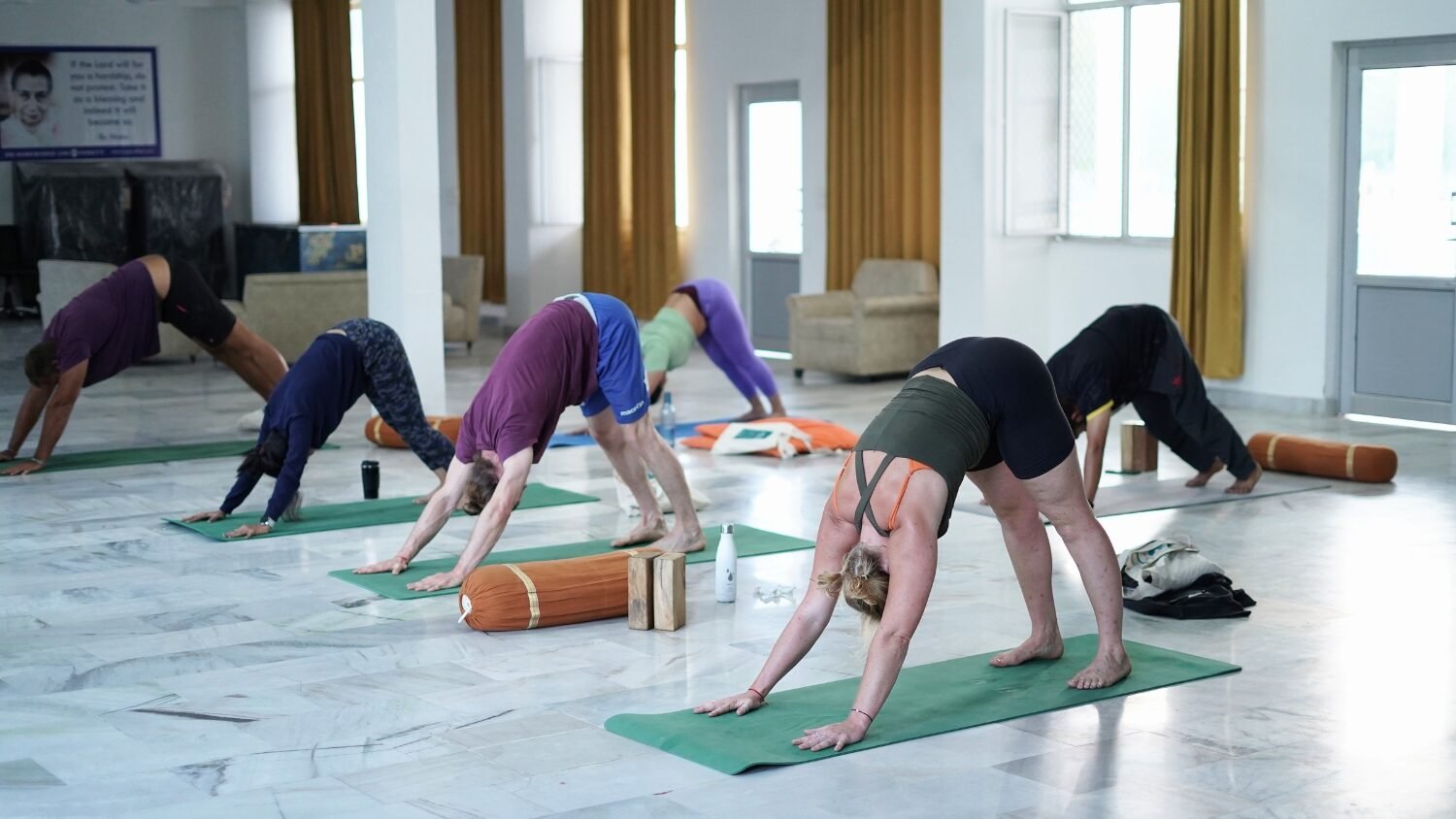
200 Hour Yoga Teacher Training in Rishikesh
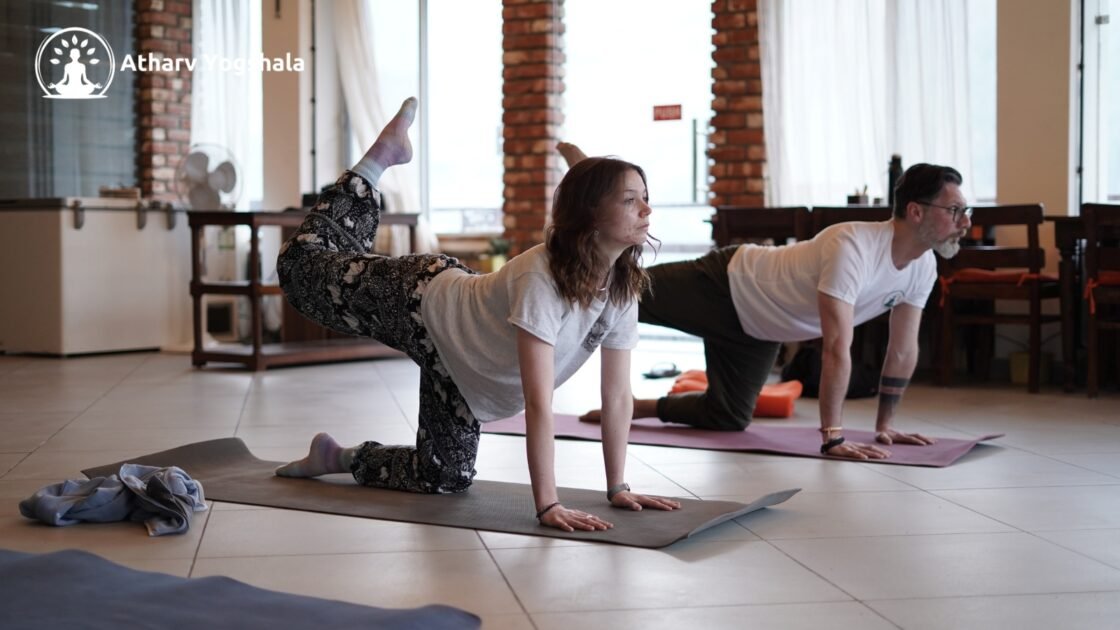
300 Hour Yoga Teacher Training in Rishikesh





Leave a comment: