
- 737 Views
- 9 Min Read
- (0) Comment
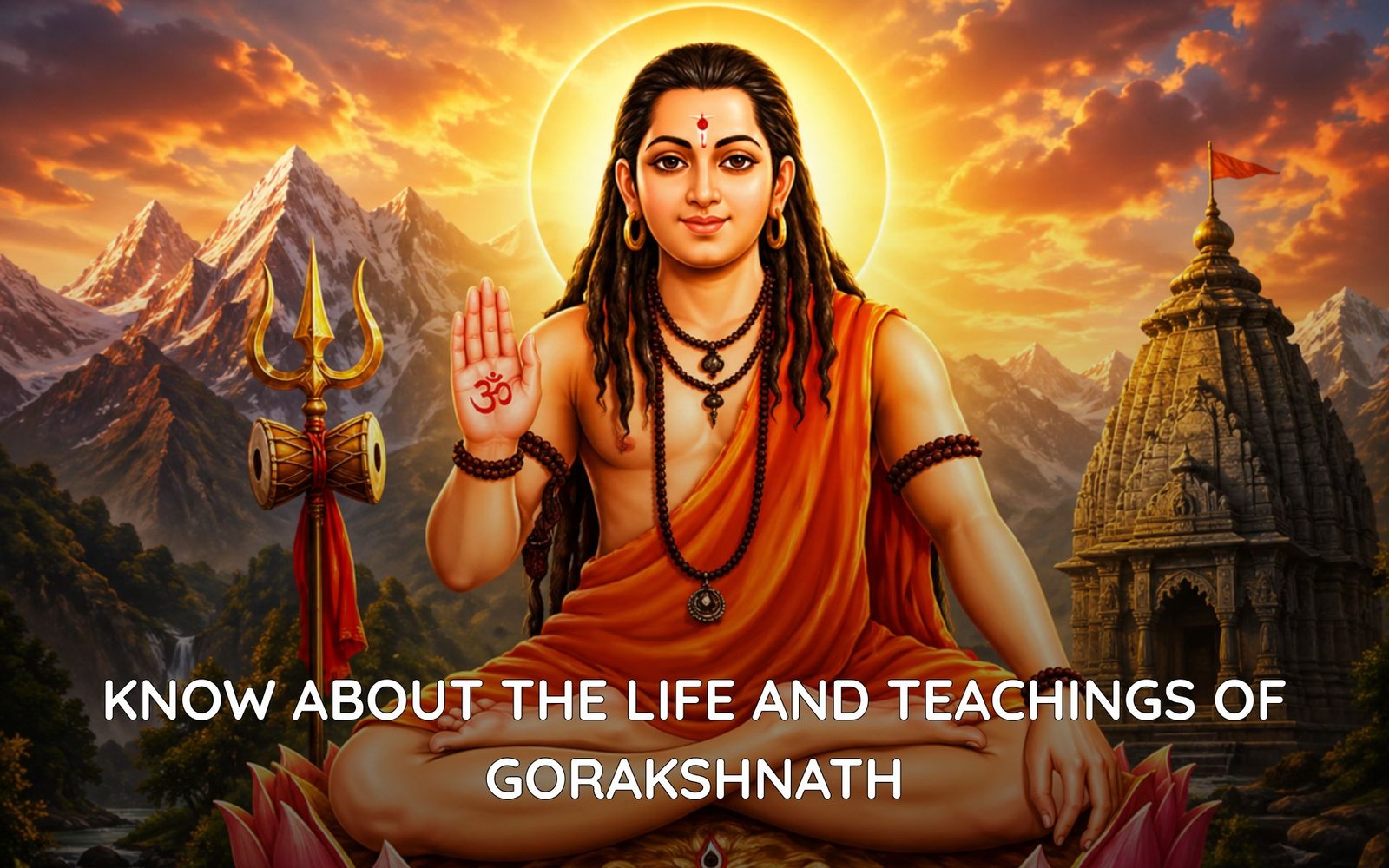
Guru Gorakhnath is highly regarded in the culture of saints since he introduced many meditation methods that have not been presented by any other. Gorakhnath opened innumerable doors of meditation which were not opened previously.
One of the meditation techniques taught by Buddha is Vipassana. Mahavira taught Shukla Dhyana (pure meditation), and Patanjali taught Nirvikalpa Samadhi (thought-free meditation). The spiritual philosophy of Guru Gorakhnath teaches the path of yoga, renunciation, and liberation.
The spiritual philosophy of Guru Gorakhnath teaches the path of yoga, renunciation, and liberation. Gorakhnath, however, handed keys to every possible door of the temple of the Divine. He was an exceptional individual and must be listed among the few like Krishna, Buddha, Mahavira, Patanjali and Gorakh. The life of Gorakshnath teaches us about discipline, renunciation, and spiritual awakening.
Meditation Traditions: Buddha, Mahavira, Patanjali, and Gorakhnath
It is said that one of the greatest yogis who ever existed was Gorakshanath (or Gorakhnath), and he is credited as being one of the founders of the Nath Hindu monastic movement in India. He is regarded as one of the two prominent students of Matsyendranath, but has since risen to fame and prominence more than his Master. The teachings of Gorakshnath emphasize self-control, meditation, and inner realization.
His disciples are located in India at a location called Garbhagiri, located in Ahmednagar in Maharashtra. Gorakshanath has been worshipped long before being deified, and he is thought to be a representative of, and even the embodiment of, Lord Shiva. In ancient sources, Gorakshanath is mentioned in the Padma Purana, the Brahmanda Purana, the Skanda Purana, and the Matsyendranath. Guru Gorakhnath Biography describes the journey of a great yogi and spiritual master of India.
The Spiritual Philosophy of Guru Gorakhnath
He was among nine saints called Navnaths and is very popular in Maharashtra, India. Hagiographies state that he was not only a man teacher, but he was one who was well established beyond the laws of space and time, and manifested himself on earth at various ages. According to historians, Gorakshanath lived sometime in the first half of the 2nd millennium CE, though they differ on what century. Archaeological and textual estimates place it between the 12th and 15th century and Grierson estimates it to the 14th century. Gorakhnath Philosophy focuses on the unity of body, mind, and soul through yoga.
The Nath lineage status is regarded as paramount in the annals of spiritual practice in the entire Sanatana Dharma Tradition of India. The Nath lineage is supposed to have descended from Adinath (Primordial Master) Lord Shiva, whose lineage is supposed to have been nine Naths and eighty-four Siddhas (perfected Yogis, adepts). All of them are put by historians in the Middle Ages between the ninth and the fourteenth century. Spiritual Teachings of Gorakhnath encourage inner purity and devotion to truth.
His Birth History
It is well known that Guru Gorakhnath was not born of a womb of a mother, but he was formed of cow dung. One time, Guru Matsyendranath had gone to receive some bheeksha at the home of a poor lady. Upon the arrival of the guru, she was crying inconsolably. When Matsyendranath beheld her, she wept at his feet. The Guru was overwhelmed with pity and requested her to tell him why she was in tears. The woman responded that she had no child despite the fact that she had been married for several years. She begged Baba to offer her a boon to make her a mother and achieve her desire of becoming a mother.
Guru Matsyendranath began to chant some magic mantras and took out of his pouch a bhasm or magic powder and gave it to the woman, telling her to consume this bhasm and her desire would be realized. Hatha Yoga Origins are closely connected with the practices taught by the Nath yogis.
A decade later, the woman could not have a child. One day, Guru Matsyendranath was passing by, as fortune would have it. Detachment and Self-Realization are central ideals in the teachings of the Nath yogis.
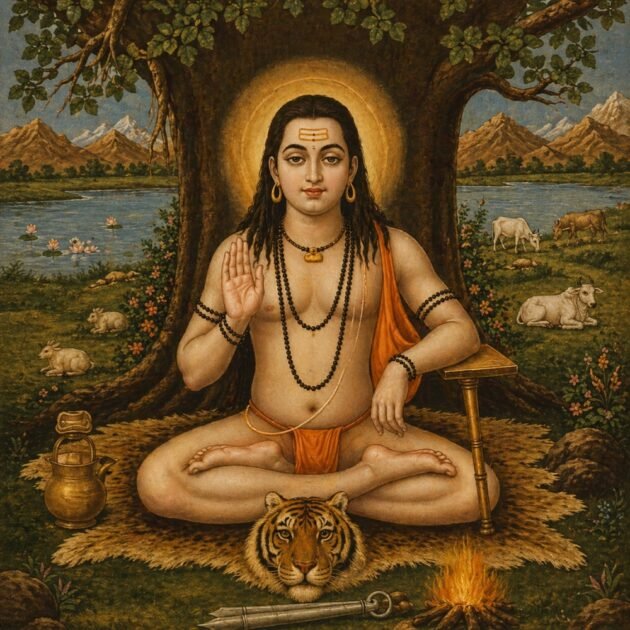
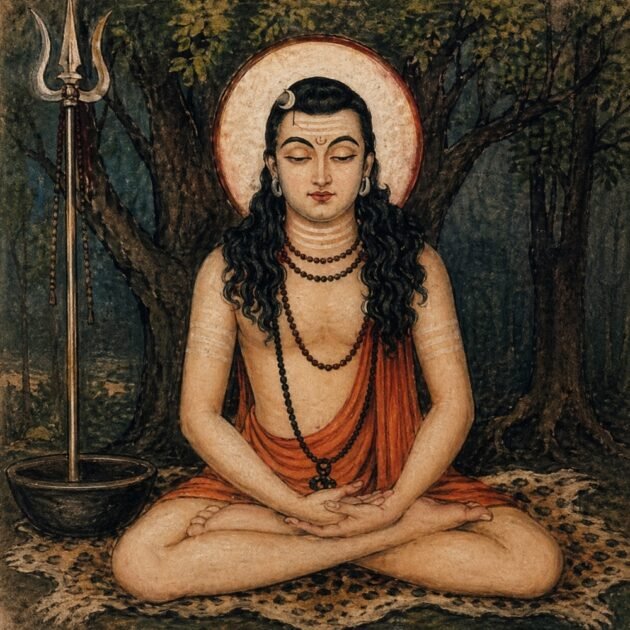
The woman began to cry on hearing him, and gave him the entire lamentable story of what had become of the bhasm. The great yogi informed her that it was a magic bhasm and they are never counterfeit. He asked the lady to bring him to the cow dung heap. As they entered there, he began calling to the boy, and lo and behold! A boy of 12 years came out of the dung heap. Since the boy had been born of the cow dung, the Yogi called him Gorakhnath and brought the boy with him on his tours. Nath Yogi Tradition promotes discipline, meditation, and mastery of the body and mind.
Guru Gorakhnath’s Influence
Guru Gorakhnath is such a great rock among the saints that it sustains the spiritual temples of yoga men, meditators, wise men, devotees and saints. His birthplace is unclear, with such places as Godavari, Eastern Bengal, Punjab, Nepal and Rajasthan mentioned. The most agreeable version says he was born on Vaishakh Purnima (a full moon day) in 991 AD in the village of Goganedi, Hanumangarh district, Rajasthan. This day is marked as the Roti Festival. Nath Sampradaya Teachings guide seekers toward detachment and spiritual liberation.
His Guru
Matsyendranath or Machhindranath was the guru of Gorakhnath. Matsyendranath is said to have introduced Gorakhnath to the ultimate truth and started the Nath sect. Jalandhar Nath is said to be the guru brother of Gorakhnath. A popular saying goes: Jaag Machhinder, Gorakh Aaya (Wake up, Machhinder, Gorakh has come). Gorakhnath and Matsyendranath represent the sacred guru–disciple relationship in the yoga tradition.
A Story of Awakening
At one point, when Matsyendranath was on a journey through Eastern India, he was engrossed in sensuous pleasures in the Kadli area, which was a region known to practice tantra. As Gorakhnath heard this, he thought he must do everything to get his guru back on the right track. Gorakhnath came to his guru and, with vehement language, told him, Wake up, Machhinder, Gorakh has come.
His lines shook Matsyendranath out of his trance, reminding him of his yogic way. Matsyendranath, through his gratitude to his disciple, said,
You are now not Gorakhnath, you are Guru Gorakhnath.
Gorakhnath and Kundalini Awakening are often linked with deep yogic practices and energy transformation.
Nath Tradition
When the river is the Meditative path of Guru Gorakhnath, the Bhakti Movement of the medieval period is the river. Guru Gorakhnath brought together the many religious ways under the Nath sect, and this has become a symbol of unity and assimilation. Medieval Yoga Masters like Gorakhnath helped preserve and spread yogic knowledge.
His Teachings and Legacy
The teachings of Guru Gorakhnath were focused on self-discipline, awakening of kundalini, controlling senses, detachment and spiritual purity. His slogan, Alakh Niranjan, also turned out to be the guiding slogan of his followers. Yogic wisdom of Gorakhnath inspires seekers to pursue self-realization through yoga.
Disciples
The major followers of Guru Gorakhnath were Bhartrihari, Gopichand and Bhaironath. The Nath tradition, which is a group of 9 Nath saints, was prolific in India, Nepal and Tibet, and became renowned due to the focus on yoga and spirituality. Indian Saint Gorakhnath is remembered as one of the greatest spiritual masters of medieval India.
Literary Contributions
The teachings of Guru Gorakhnath have been recorded in books such as Gorakhnath Bani, Gorakh Shatak and Jnanashatak. His teachings have had an impact on centuries of spiritual practices. Gorakhnath contribution to yoga includes the development and systematization of Hatha Yoga practices.
Immortal Legacy
Guru Gorakhnath is no longer with us, but his teachings and presence are felt in the spiritual world, even though it is not known when he departed the mortal world. According to his followers, his spirit exists in the performance of yoga and the chanting of Alakh Niranjan. The Guru-Shishya tradition in Nath sect highlights the importance of learning directly from a realized teacher.
Highlights of his teachings
He is referred to as the founder of Hatha yoga, along with his master Matsyendranath, though many of the tenets and practices of this school were in place long before his era. Who was Gorakhnath in yoga history? He was a legendary yogi and founder figure of the Nath tradition.
Goraksanatha (Goraksasataka, Hundred Verses of Goraka) is a simplistic Hatha yoga text, and an account of the six limbs of yoga (which omitted the two limbs of yama in the Patanjali yoga system). What are the main teachings of Gorakhnath? They include discipline, meditation, and the awakening of inner consciousness.
Gorakhnath doctrines are open to all castes, and this fact can explain the distribution of Gorakhnathis across India. Gorakhnathis are not expected to just live in a monastery, and the Gorahkbodh permits them to live in marketplaces and roads and in the shadow of trees. Gorakhnathis, then, may be found in nearly every locality and are very diffused like any of the ascetic orders. Gorakhnath and Nath Sampradaya explained the philosophy and practices of the Nath yogi lineage.
Conclusion
Gorakhnath and his life and teachings remain of profound importance in the history of yoga and Indian spirituality. Being a great master of the Nath tradition and a student of Matsyendranath, Gorakhnath was instrumental in planning and popularizing yogic knowledge in India. His teachings were more focused on discipline, self-realization, meditation, and control of the body and mind using the yogic practices. Siddha tradition in India recognizes yogis who attained spiritual powers through intense practice.
Gorakhnath contributed to the formation of an effective approach to spiritual enlightenment through his writings, like Goraksha Sataka, and his role in the evolution of Hatha Yoga. His philosophy helps seekers to go inside, develop inner-awareness and seek a harmonious life based on moral behavior and yogic training. How did Gorakhnath influence Hatha Yoga? He spread powerful yogic practices that shaped the Hatha Yoga system. Even now, the wisdom of Gorakhnath still continues to guide the yoga practitioners and spiritual seekers in this world and teaches us that the ultimate change would be an inward process, self-control and the awakening of the divine consciousness within.
FAQs
1. Who was Gorakshnath?
Gorakshnath was a saintly yogi and spiritual guru of the Nath school in India. He is regarded as one of the most influential personalities in the philosophy of yoga and is generally linked with the growth and popularization of Hatha Yoga.
2. When did Gorakshnath live?
Historians can’t prove the exact dates of the life of Gorakshnath. However, most scholars suppose that he lived between the 11th and 12th centuries in India.
3. What is the tradition of Nath, which was established by Gorakshnath?
The Nath tradition is a yoga and spiritual tradition that stresses meditation, self-discipline and inner change. Even though Matsyendranath is believed to be the first founder, it is during the time of Gorakshnath that the teachings were highly organized and popularized in India.
4. So what are the chief teachings of Gorakshnath?
Gorakshnath had advocated the role of self-realization by use of yoga, meditation, virtuous life, and control of the body and mind. His teachings lay stress on discipline, detachment, knowledge of the spirit and awakening of inner energy.
Yoga Teacher Training Courses in Rishikesh
100 Hour Yoga Teacher Training in Rishikesh
200 Hour Yoga Teacher Training in Rishikesh

300 Hour Yoga Teacher Training in Rishikesh



Leave a comment: