

- 217 Views
- 7 Min Read
- (0) Comment
Many people may be confused about faith and devotion or bhakti in meditation. Meditation is a state of mind— faith and devotions show the depth of your practice. Thousands of years ago, meditation was practised across all major spiritual traditions. But with all the definitions, one thing has always remained the same: the significance of faith in meditation and the role devotion plays in it. It makes the difference between a normal yoga and exercise and a real path of spirituality. The spiritual connection between bhakti and meditation creates a path to calmness, motivation, and mental growth.
However, understanding a path in your spiritual journey is difficult. You have to learn and understand the differences of faith, devotion and meditation. Now, to achieve better growth on your journey, let’s explore how faith and devotion in meditation practice can transform your quality of life.
Deep Purpose and Meaning of Faith in Meditation?
Without faith focusing on meditation never provides a benefit in your life. It is working trust – in the direction of the process, in the direction of the path, of what habitual practice often attains with time.
It helps stabilize us in the face of uncertainty or stalled progress. The importance of faith in spiritual meditation is most evident in the dark periods— weeks in which it seems useless to be sitting and the practice is yielding no evident payoff. Strong shraddha keeps practitioners grounded. Without it, one can easily lose their way.
Faith also shifts the quality of attention during practice. The mind relaxes more when you sit with a real belief in the process. There are thoughts as well, but you do not struggle with them so urgently. It is that easiness which predisposes to real stillness. The practice of meditation can help you control your mind and find calm on your spiritual journey.
Effectiveness of Devotion in Meditation Practice
Another aspect is devotion or bhakti, which is contrasted with faith, but the two are synergistic. Faith is cognitive. It shows the emotional part of your mind— the heart’s orientation toward something greater than the self. Spiritual surrender in meditation shows your devotion and growth of your conscious mind in the practice.
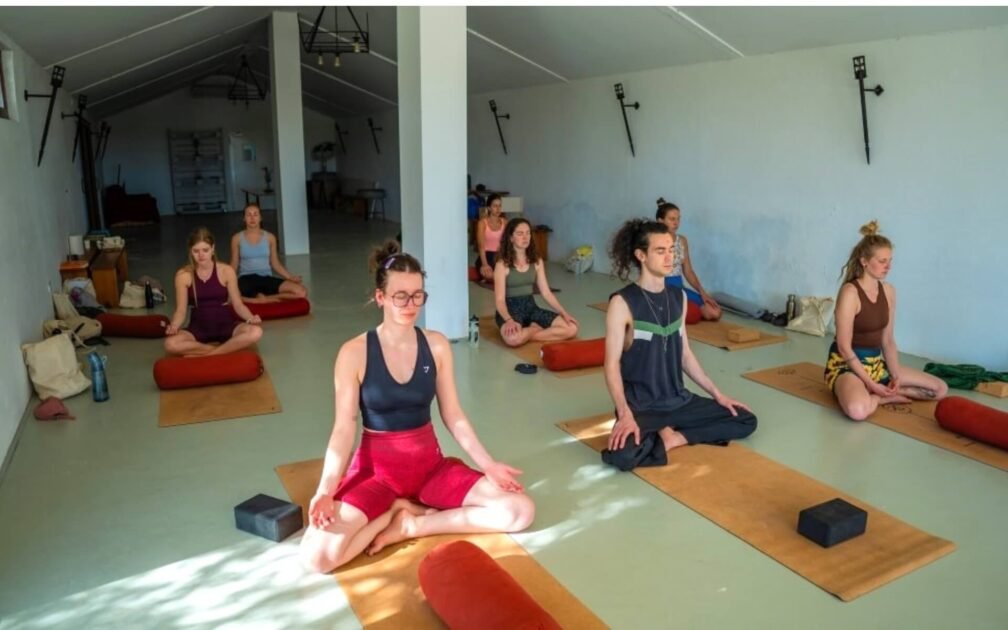
Chanting, prayer, sitting, silent sitting or a few minutes of positivity before starting any of this is devotional. The exterior appearance is not as important as the interior mind.
It is the phase of submission. You’re not trying to achieve a result. You are giving practice, your attention, your time, and your willingness to help others. This transformation alters the internal experience of meditation. It shows the willingness and the depth in your meditation. It enhances with practicing meditation at least 30 minutes in a day.
The Connection of Bhakti and Meditation in Spiritual Path
During dhyana, the eighth limb of Patanjali’s ashtanga system, the meditator maintains continuous, undistracted focus on an object. Bhakti is divine, whether it builds a connection with your ishta Devta or the universal consciousness. The bhakti and meditation connection is more structural than it appears. Bhakti supplies the emotional fuel. Meditation supplies the space in your mind.
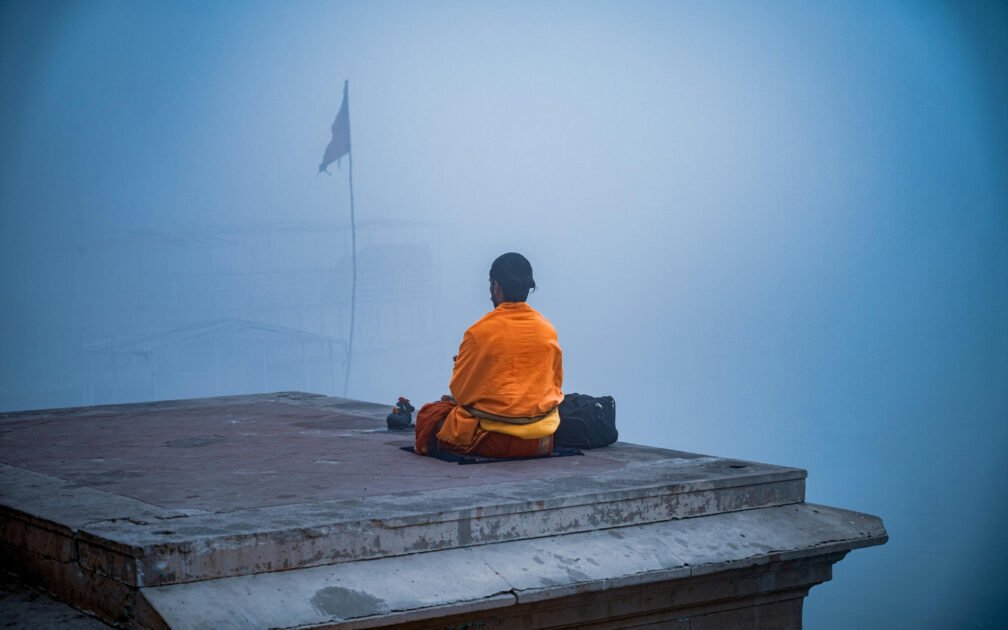
Combining bhakti and dhyana yoga has only one evident outcome: the heart is actively involved with the mind. Focus increases and helps to grow your mind spiritually. Emotional involvement helps keep the attention longer through the sessions than would power alone.
Understand the Impact of Devotion in Meditation from Bhagavad Gita
Bhagavad Gita has all the answers of your life. If you are ever confused about the faith and bhakti in meditation you must read the Srimad Bhagavatam. The Bhagavad Gita discusses three paths to liberation: jnana (knowledge), karma (action), and bhakti (devotion).
Meditation with devotion in the Bhagavad Gita appears most directly in chapters 9 and 12. Krishna tells Arjuna that fixing the mind on the divine and meditating with love is the clearest route to union. Not because devotion bypasses discipline, but because it sustains it. A practitioner who loves what they’re doing doesn’t need to force consistency.
Krishna is particular regarding what this will be like in everyday life. The practitioner focuses on the divine and upholds that orientation in all actions, not only during the formal sitting process. You can build a connection; the whole day is a meditation.
How Devotion Improves Meditation Focus in Your Daily Life?
The benefits of devotion through meditation are provided in five ways to provide clarity in life.
- Mental clarity: Devotional orientation narrows attention. When you meditate about something that you really care about, the mind does not wander. Scattered thinking is more silent, and the object of meditation is more easily held.
- Emotional stability: Sitting with devotion controls emotions. The bhakti and sincerity meditations are more likely to be settled than just doing meditation.
- Discipline: Devotion and faith brings value in your meditation. There is no need to be reminded by external signals that it is time to practice when the session becomes more of an act than a productive task.
- Connection to purpose: The states of offering meditation and practicing meditation as a habit are different. Framing the session with Bhakti deepens the focus, since the practice is of personal importance and transcends the session.
- Self motivation: Devotion does not teach war. The meditation with combining bhakti and dhyana yoga builds your mind, making you more motivated and sustained. It also prevents frustration, making the meditation more fruitful.
Learn Faith from Patanjali’s Yoga Sutra
Patanjali’s arrangement is not by chance. Faith comes before effort. Before you can devote yourself to the path, you must believe that it leads somewhere. The teachings of Patanjali on faith appear in the very first chapter of the Yoga Sutras. Sutra 1.20 lists shraddha as the first of five qualities that support samadhi — placed ahead of effort, memory, absorption, and discernment.
He further clarifies that shraddha is not utopian wishfulness. It has a solid, grounded trust based on firsthand experience. As the practitioner witnesses actual change, including the focus on attentiveness, in the ability to control emotions, and in their connection to their own thoughts, faith grows. Spiritual surrender in meditation is one of the most misunderstood ideas in yoga. It doesn’t mean passivity or disengagement. It means letting go of ego-driven control over the outcome.
Sutra 1.30 enumerates nine hindrances to yoga, and doubt (samsaya) is a solid obstacle. Uncertainty and non-coherence feed off one another. Without faith, the practitioner doesn’t practice regularly. They never do so without regular practice, which gives them direct experience that dissolves the doubt. The only way to end that cycle would be to choose to believe before the evidence shows up.
People Read this also : Role of Breath and Mind in Dhyana Yoga
Conclusion
The importance of faith in spiritual meditation is beyond imagination but there are structural requirements. Practice with devotion and faith builds your mind and spiritual growth in life. In the absence of bhakti, focus remains superficial – technically right, but emotionally empty.
The role of belief in deep meditation operates at a practical level. What a practitioner believes about meditation directly shapes their experience of it. Belief doesn’t have to be absolute to work. Provisional trust suffices to begin with. The discipline develops faith with time. The majority of serious meditators explain their faith as the result of experience, rather than something they came to on a day one.
FAQ
Why is faith important in meditation?
Faith in meditation practice changes the emotional quality of concentration. Instead of forcing attention onto an object, the practitioner brings love and sincerity to the practice itself. This sustains focus more reliably than willpower and builds the consistency that deepens the practice over months.
How does devotion help deepen meditation practice?
Devotion in meditation practice is the emotional aspect of concentration. The practitioner focuses their mind and sincerity on the meditation, rather than on an object. This keeps the focus more stable than willpower and develops the stability that strengthens the practice over time.
What is the connection between bhakti (devotion) and meditation?
The bhakti and meditation connection works structurally. Bhakti gives emotional involvement and guidance. Meditation furnishes the disciplined vessel. When bhakti yoga is combined with dhyana yoga, the object of concentration is held as an object of love, not merely as a technique, to change practice into steady devotional attention.
Can meditation be effective without faith or belief?
The role of belief in deep meditation practice is to shape the nervous system’s responsiveness. That practice necessitates some form of trust that the direction is being taken. Trust is sufficient to begin.
What do yogic scriptures say about faith and devotion in meditation?
In its teaching, Patanjali refers to shraddha as the first attribute that renders samadhi in the Yoga Sutras, under the category of dharma, and to doubt as one of the nine obstacles. Meditation with devotion in the Bhagavad Gita occupies a superior place over knowledge-based practice, and Krishna presented bhakti as the most direct path.
Yoga Teacher Training Courses in Rishikesh

100 Hour Yoga Teacher Training in Rishikesh
200 Hour Yoga Teacher Training in Rishikesh

300 Hour Yoga Teacher Training in Rishikesh




Leave a comment: