
- 33 Views
- 14 Min Read
- (0) Comment
Yoga Alliance certification is the most widely recognized yoga teacher qualification in the world. It is managed by Yoga Alliance, a non-profit organization in the United States that keeps a registry of yoga teachers and schools. This certification shows that a teacher has completed an approved training course that covers yoga postures, anatomy, breathing techniques, yoga philosophy, and teaching skills.
At Atharv Yogshala in Rishikesh, we train students from around the world in these standards every month. Many new students come to us with questions about what Yoga Alliance actually checks, how the registration fees work, and whether a 200-hour certification (RYT 200) is enough to start teaching or if they need the 500-hour certification (RYT 500). This guide explains Yoga Alliance standards, course content, registration costs, and career paths in simple and clear terms.
Quick Overview: Key Takeaways
- Voluntary Registry, Not Government License: Yoga Alliance is a private membership registry rather than a statutory licensing department. National governments do not issue yoga licenses.
- Universal Industry Baseline: Commercial yoga studios, boutique gyms, and insurance underwriters treat Yoga Alliance registration as the baseline hiring prerequisite.
- The 2020 Elevated Standards: Accredited programs must divide training across Techniques, Training & Practice (75 hours), Anatomy & Physiology (30 hours), Yoga Humanities (30 hours), Professional Essentials (50 hours), and Electives (15 hours).
- RYS vs RYT Distinction: Instructors can only register as a Registered Yoga Teacher (RYT) after graduating from a Registered Yoga School (RYS) such as Atharv Yogshala.
- Curriculum Depth Gap: RYT 200 represents foundational entry-level training, while RYT 500 requires 500 total educational hours plus 100 logged post-graduation teaching hours.
- Ongoing Maintenance Rules: Active registry status requires an annual $65 USD fee, alongside logging 30 teaching hours and 16 continuing education hours every three years.
What Does Yoga Alliance Certification Actually Mean?
Understanding yoga alliance certification requires separating your academic diploma from your registry profile. Practitioners frequently mistake their ashram graduation diploma for the registry listing managed by Yoga Alliance.
Here is the operational division:
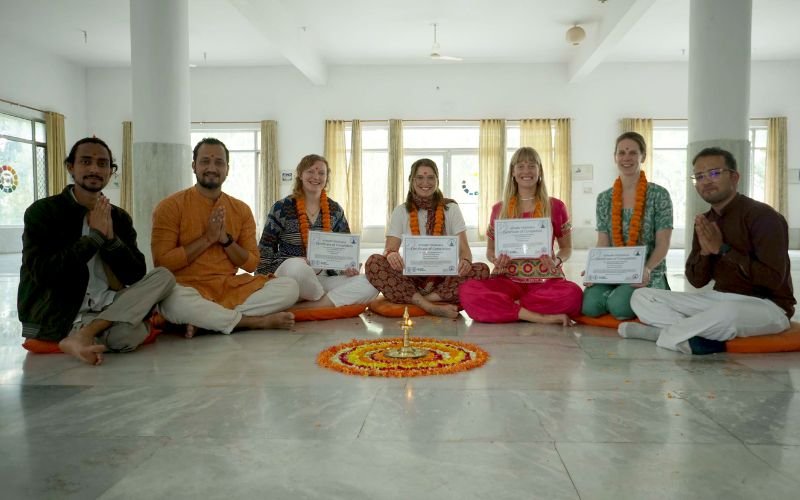
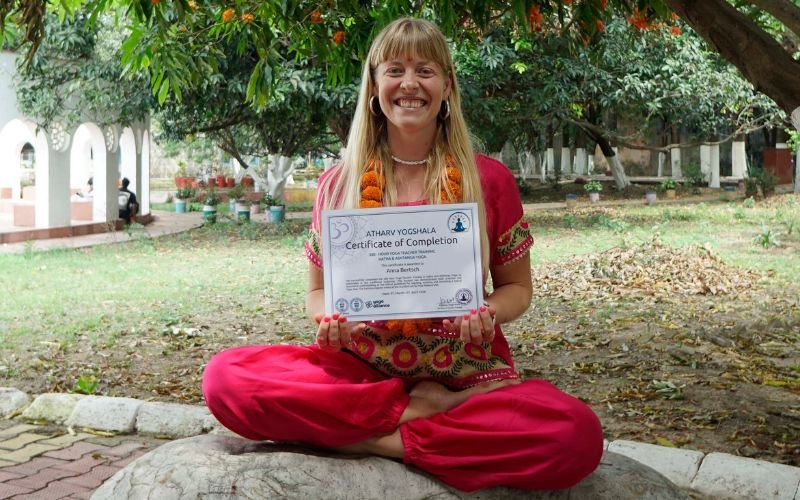
- The Institutional Diploma: When you complete an intensive residential course, your school grants a certificate of completion. That diploma certifies that you fulfilled course hours, demonstrated postural alignment knowledge, passed written anatomy examinations, and completed practical teaching evaluations.
- The Registry Listing: Upon graduation, you present your diploma to Yoga Alliance through their digital verification portal. Once the school validates your graduation and you pay registry fees, your profile enters the Yoga Alliance teacher directory. You are then authorized to use the official registered mark.
Registry Status vs Statutory Government Licensing
Yoga Alliance exercises no statutory legal authority over physical exercise or spiritual disciplines. No national government in North America, Europe, or Asia mandates a state license to instruct yoga classes.
Within the fitness and wellness marketplace, however, self-regulation governs commercial risk. Insurance underwriters require verified credentials before binding professional liability coverage. Studio managers receive dozens of applications each month and rely on the Yoga Alliance directory to filter unaccredited applicants. Without an accredited diploma, obtaining employment at reputable centers remains exceptionally challenging.
Yoga Alliance Certification in India
Core Designations Decoded: RYS vs RYT
The Yoga Alliance credentialing framework operates on two distinct designations: school accreditations and individual teacher registrations.
1. RYS (Registered Yoga School)
An RYS designation belongs to an educational institution rather than an individual instructor. To obtain this status, a school must submit its daily syllabus, class manuals, facility documentation, and lead trainer credentials to Yoga Alliance for formal audit.
Standard school categories include:
- RYS 200: Accredited to deliver foundational 200-hour teacher training programs.
- RYS 300: Accredited to deliver advanced 300-hour teacher training programs for existing 200-hour graduates.
- RYS 500: Accredited to offer both foundational and advanced training modules, or integrated 500-hour programs.
Atharv Yogshala in Rishikesh holds accredited RYS status, delivering courses that satisfy every updated standard established by the international board.
2. RYT (Registered Yoga Teacher)
An RYT designation belongs to an individual instructor. You receive this status only after completing your studies at an accredited RYS and maintaining an active directory membership.
Primary teacher credentials include:
- RYT 200: Foundational qualification awarded upon finishing 200 hours at an RYS 200.
- RYT 500: Advanced qualification awarded upon completing a foundational 200-hour course plus an advanced 300-hour course, backed by 100 logged teaching hours.
- E-RYT 200 / E-RYT 500: Experienced tier designations earned after accumulating substantial post-graduation teaching hours over multiple calendar years.
The Institutional Gate Rule: You cannot obtain an RYT credential without an authentic certificate from an active RYS. Attending an unaccredited studio leaves you ineligible for directory registration, regardless of the teacher’s personal reputation.
Yoga Alliance Elevated Standards: The Official Syllabus Breakdown
In February 2020, Yoga Alliance implemented the official Yoga Alliance standards across all accredited academies. This regulatory update replaced ambiguous guidelines with defined competency categories, mandating that lead trainers instruct at least 150 of the 200 total hours through synchronous contact sessions.
Under these standards, every approved 200-hour course must distribute 200 curriculum hours across four mandatory educational categories:
| Educational Category | Mandatory Minimum | Core Subjects & Technical Competencies |
| Techniques, Training & Practice (TTP) | 75 Hours | Asana mechanics, alignment principles, pranayama, meditation, shatkarma kriyas, and mantra chanting. |
| Anatomy & Physiology (AP) | 30 Hours | Skeletal variation, joint kinematics, fascia anatomy, spine biomechanics, vagal tone, and injury contraindications. |
| Yoga Humanities (YH) | 30 Hours | Historical origins, Patanjali’s Yoga Sutras, Bhagavad Gita, Upanishads, ethical boundaries, and cultural context. |
| Professional Essentials (PE) | 50 Hours | Intelligent sequencing, verbal cueing, hands-on adjustments, class management, practicum teaching, and business ethics. |
| Elective / Integrative Study | 15 Hours | School specializations, Ayurveda basics, sound healing, or specialized postural anatomy workshops. |
| Total Program Requirement | 200 Hours | Complete foundational preparation for public yoga instruction. |
1. Techniques, Training & Practice (75 Hours Minimum)
This subject block forms the physical engine of your teacher training. Rather than treating postures as basic fitness drills, trainees examine the structural architecture of each posture across traditional Hatha Yoga and Ashtanga Vinyasa systems:
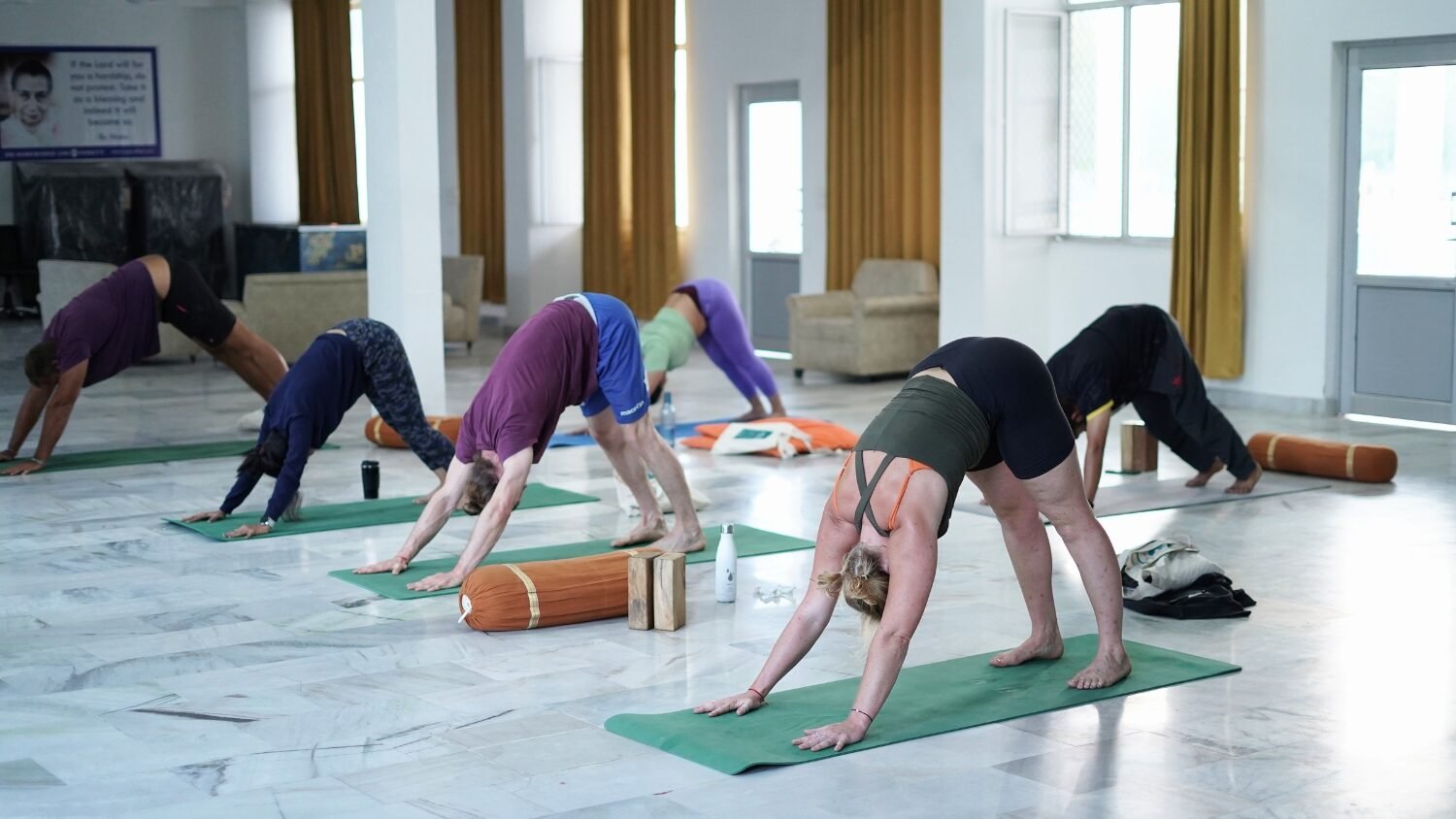
- Asana Biomechanics: Deconstructing standing balances, hip openers, spinal twists, backbends, forward folds, and inversions. Trainees evaluate bone compression versus muscular tension, discovering why skeletal anatomy dictates mobility limits.
- Pranayama Breathwork: Practicing foundational and advanced breath control methods, including Nadi Shodhana, Kapalabhati, Ujjayi, Bhastrika, and classical kumbhaka retention. For detailed protocols on breath scheduling, examine our guide on pranayama timing and daily breathwork sequencing.
- Shatkarma Purification: Performing classical cleansing kriyas, such as Jala Neti nasal irrigation and Nauli abdominal churning, to prepare physical channels for seated meditation. Read our full study on shatkarma cleansing kriyas for traditional methodology.
- Meditation (Dhyana): Developing systematic concentration exercises (Dharana) moving toward uninterrupted internal awareness.
2. Anatomy & Physiology (30 Hours Minimum)
Contemporary studio instruction requires comprehensive movement literacy. Anatomy modules connect ancient yogic practices with physical biomechanics so instructors protect students from chronic musculoskeletal strain:
- Skeletal Variance: Comparing pelvic structure, femoral head angles, and spinal curvature. Students discover why identical verbal cues yield completely different joint positions across diverse bodies.
- Functional Kinematics: Studying muscle groups as agonists, antagonists, and stabilizers. Trainees explore reciprocal inhibition, observing how engaging the quadriceps facilitates safer hamstring lengthening during forward flexion.
- Spine Mechanics: Analyzing axial extension, lateral flexion, and rotational loading. Trainees examine how forward folding with a rounded lumbar spine increases shear stress across the L4-L5 and L5-S1 intervertebral discs.
- Nervous System Regulation: Studying how slow, diaphragmatic exhalation stimulates the vagus nerve, initiating parasympathetic recovery and reducing physiological stress markers. Scientific research documents this effect in studies on vagus nerve stimulation through breathwork.
3. Yoga Humanities (30 Hours Minimum)
Yoga originated as a contemplative psychology, not physical gymnastics. The Yoga Humanities module grounds modern teachers in classical literature and ethical practice:
- Patanjali’s Yoga Sutras: Examining the classical eight limbs of Raja Yoga as outlined in Patanjali’s Yoga Sutras, beginning with social ethics (Yamas) and personal observances (Niyamas).
- The Bhagavad Gita: Analyzing Karma Yoga (detached right action), Jnana Yoga (philosophical discernment), and Bhakti Yoga (devotional discipline) from the Bhagavad Gita applied within daily teaching contexts.
- Vedic Heritage: Investigating traditional practices, including sacred ceremonies. Explore our analysis of Vedic fire ceremony traditions to understand their spiritual context.
- Instructor Ethics: Establishing clear student-teacher boundaries, transparent financial policies, physical adjustment consent protocols, and anti-harassment standards.
4. Professional Essentials (50 Hours Minimum)
This division converts personal practitioners into authoritative public instructors through class architecture, voice projection, and observed teaching evaluations:
- Sequencing Architecture: Constructing peak-pose sequences that systematically warm targeted muscle groups before demanding holds, followed by neutralizing postures and grounding cool-downs. Learn how movement tempos differ in our guide on static versus dynamic asana practice.
- Direct Verbal Cueing: Developing concise anatomical cues. Trainees replace poetic generalities with operational directions such as “press through the inner heel” or “draw the front ribs toward the spine on your exhale.”
- Hands-On Adjustments: Practicing physical assists that stabilize joints without forcing students past anatomical end-ranges.
- Observed Practicum: Every student instructs live peer classes under direct faculty observation. Senior teachers deliver detailed feedback regarding vocal volume, room positioning, time management, and adjustment safety.
RYT 200 vs RYT 500: Deep Comparative Teardown
Choosing between a foundational 200-hour course and an advanced 500-hour path depends on your background, professional objectives, and teaching timeline.
| Evaluation Metric | RYT 200 (Foundational Baseline) | RYT 500 (Master Qualification) |
| Prerequisite Training | Open to dedicated practitioners of all levels. | Completion of an accredited 200-hour RYS course. |
| Curriculum Hours | 200 training hours at an RYS 200. | 500 total hours (200-hr foundational + 300-hr advanced). |
| Required Teaching Hours | 0 teaching hours required to register. | Minimum 100 verified teaching hours logged post-graduation. |
| Technical Focus | Foundational postures, anatomy basics, beginner sequencing. | Advanced asanas, therapeutic adjustments, subtle anatomy, philosophy. |
| Typical Course Duration | 24 to 28 days residential immersion. | Additional 28 to 30 days residential immersion. |
| Professional Role | Studio classes, gym instruction, private beginner clients. | Senior studio teacher, workshop presenter, teacher training faculty. |
| Studio Hiring Value | Essential entry requirement for auditions. | Distinct advantage for premium studio roles and high-tier resorts. |
When Should You Upgrade from 200 Hours to 500 Hours?
A 200-hour certification gives you the operational qualifications to begin instructing public classes. However, after leading group sessions for twelve to eighteen months, instructors often encounter limitations in their adjustment knowledge, therapeutic understanding, and sequencing repertoire.
Completing an advanced 300 Hour Yoga Teacher Training in Rishikesh at Atharv Yogshala builds directly upon your 200-hour foundation. This advanced coursework covers complex adjustments, Kundalini energetic systems, restorative yoga sequencing, and detailed business strategy, elevating your credentials to the RYT 500 standard. For students with tight schedules who need an initial taste before the full 200 hours, our modular 100-hour yoga teacher training in Rishikesh serves as Semester 1 of the complete certification.
Experienced Tiers: E-RYT 200 & E-RYT 500 Explained
Accumulating teaching mileage unlocks senior designations on the Yoga Alliance registry. These Experienced tiers distinguish seasoned educators from recent graduates.
E-RYT 200 (Experienced Registered Yoga Teacher 200)
- Requirements: Holds an active RYT 200 credential, has completed at least two full calendar years of teaching post-graduation, and has logged at least 1,000 verified teaching hours.
- Privileges: Authorized to serve as Lead Trainer for an RYS 200 academy and conduct continuing education workshops (YACEP).
E-RYT 500 (Experienced Registered Yoga Teacher 500)
- Requirements: Holds an active RYT 500 credential, has completed at least four full calendar years of teaching post-graduation, and has logged at least 2,000 verified teaching hours (with at least 500 hours completed after finishing the 300-hour advanced training).
- Privileges: Holds full authorization to design, register, and direct an RYS 200, RYS 300, or RYS 500 yoga school worldwide.
FREE RESOURCE: YOGA ALLIANCE RYT ACCREDITATION CHECKLIST (.PDF)
Preparing to start your international teaching journey? Download our comprehensive 18-page accreditation checklist covering:
- Step-by-step school vetting questions to verify RYS legitimacy
- Elevated Standards curriculum breakdown with required contact hours
- Studio audition sequence templates and verbal cueing formulas
- First-year teacher liability insurance and registration cost sheet
Download the Free Checklist: Access the complete PDF guide at Atharv Yogshala Admissions Desk.
Step-by-Step: How to Register Your Credential on Yoga Alliance
Securing your listing requires five direct administrative actions:
Step 1: Complete an In-Person Course at an Accredited RYS
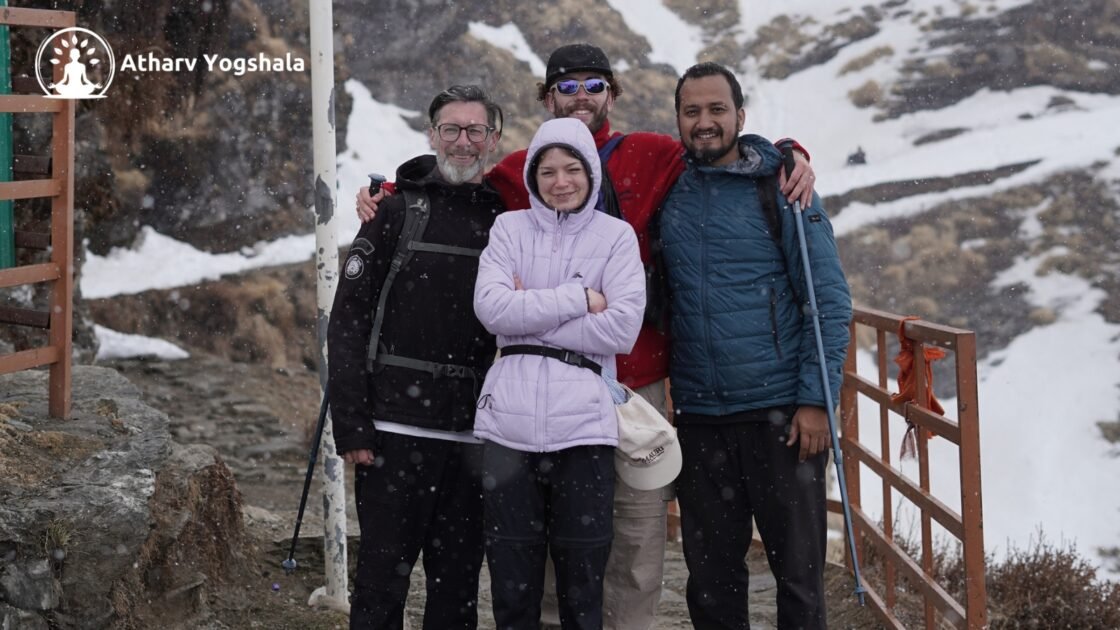
Enroll in an approved residential program. Graduating from the 200 Hour Yoga Teacher Training in Rishikesh at Atharv Yogshala guarantees that your hours satisfy all international requirements. For adventure practitioners seeking outdoor training, our Himalayan hiking yoga teacher training provides the identical certified syllabus integrated with high-altitude trekking. If you wish to experience ashram life before enrolling in teacher training, consider joining our yoga retreats in Rishikesh.
Step 2: Receive Your Official Graduation Diploma
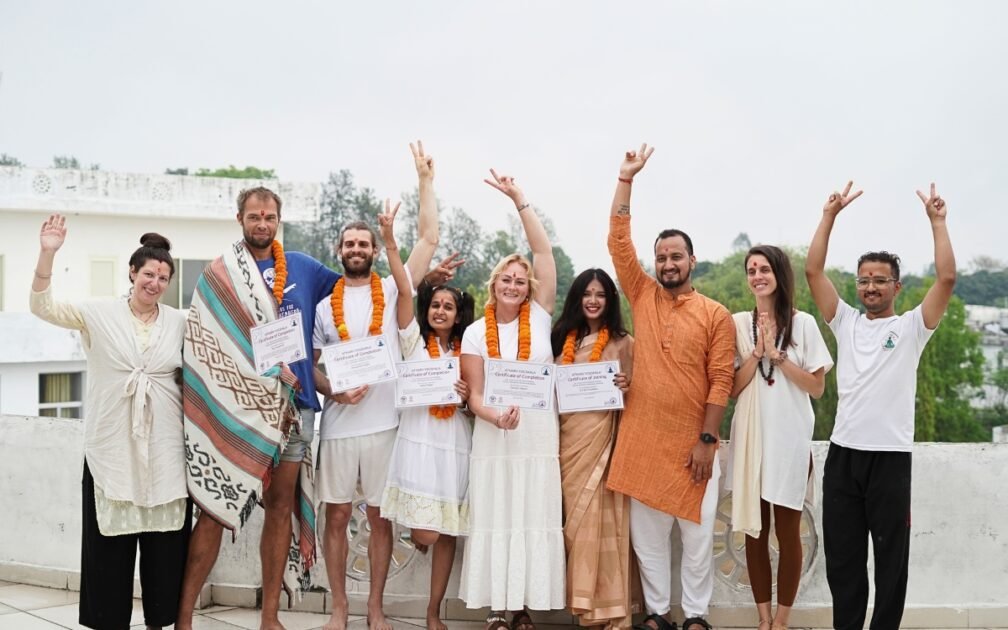
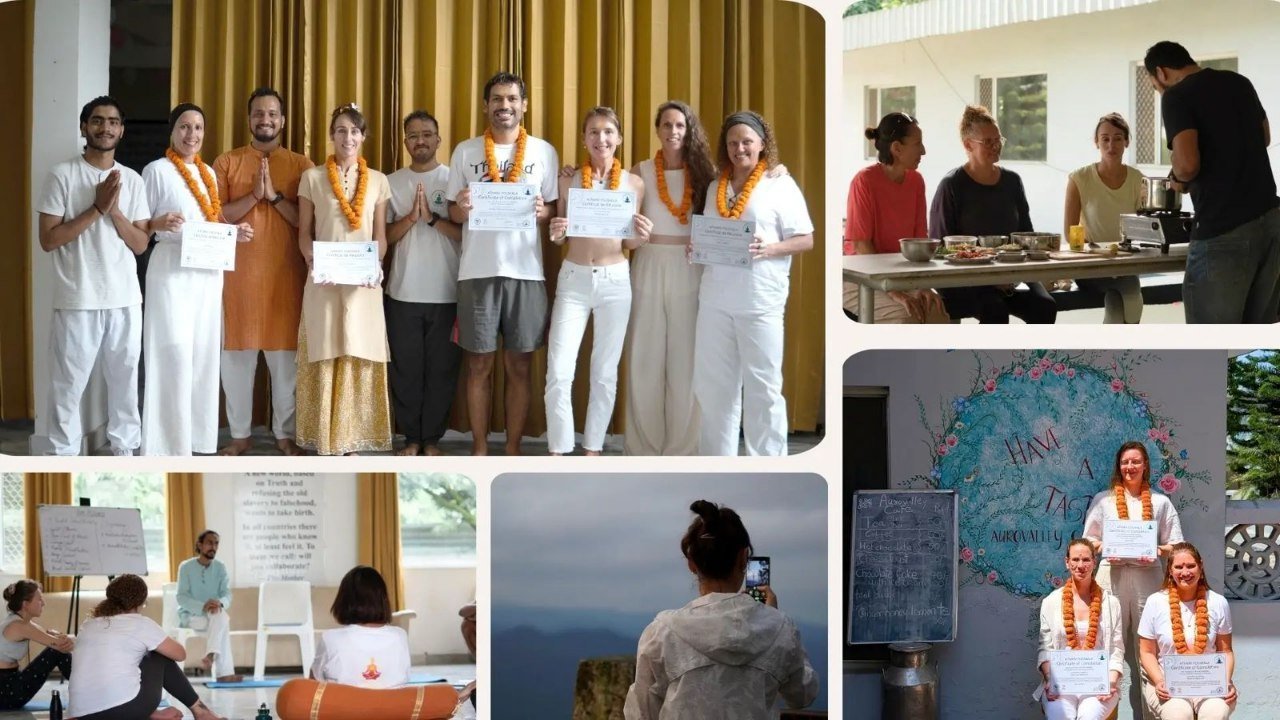
Upon completing final practicums and written assessments, the school issues your certificate of completion. This document displays the lead trainer’s registration code and the academy’s official RYS identifier.
Step 3: Register an Account on yogaalliance.org
Access the Yoga Alliance website, click Join, and create your individual teacher profile.
Step 4: Submit Training Records & Upload Certificate
Under your member dashboard, select Add Training Program, locate your school by name (Atharv Yogshala), input your graduation dates, and attach a clear image of your diploma. Yoga Alliance automatically routes a digital confirmation request to our admissions desk.
Step 5: Pay Administrative Registration Dues
Once our academy confirms your graduation through the school portal, you finalize your registration by paying official dues. Your credentials and badge become active immediately.
Costs, Annual Dues & Triennial Renewal Rules
Maintaining an active listing requires consistent administrative compliance and ongoing study.
| Fee / Milestone Type | Cost / Requirement | Frequency / Timeline | Operational Purpose |
| Application Processing Fee | $50 USD | One-time upon initial application | Covers initial credential verification and account setup. |
| Annual Membership Dues | $65 USD | Billed annually | Preserves directory profile and credential trademark usage. |
| Total First-Year Payment | $115 USD | First year of registration | Combined application fee and first-year membership dues. |
| Verified Teaching Hours | 30 Teaching Hours | Logged every 3 calendar years | Confirms active teaching engagement in public or private classes. |
| Continuing Education (CEUs) | 16 Study Hours | Completed every 3 calendar years | Ensures skill development (minimum 10 contact hours via YACEP). |
Yoga Alliance Certification in Rishikesh
Residential Ashram Immersion vs Online Certification
During 2020, Yoga Alliance introduced temporary provisions permitting schools to certify teachers online. While digital credentials remain technically accepted on the directory, commercial employers evaluate online and residential graduates very differently during live hiring auditions:
| Evaluation Dimension | Residential Ashram Immersion (Rishikesh) | Online Distance Learning |
| Hands-On Adjustments | Practiced daily on real bodies under direct mentor correction. | Theoretical adjustments observed on a computer screen. |
| Vocal Authority | Developed across spacious yoga halls without microphone support. | Spoken into a computer headset without room acoustic dynamics. |
| Skeletal Observation | Live exposure to diverse body structures, spinal curves, and mobilities. | Limited visual angles restricted by a small video feed. |
| Learning Environment | Total ashram immersion free from workplace and home distractions. | Frequent domestic interruptions, screen fatigue, and inconsistent routines. |
| Studio Audition Success | Preferred by studio owners due to proven hands-on adjustments. | Frequently rejected or questioned during physical teaching auditions. |
Yoga instruction is fundamentally a tactile discipline. You cannot learn how to support a student during a headstand or correct a pelvic misalignment through digital video modules. Studying at Atharv Yogshala in Rishikesh, beside the sacred Ganga, provides an authentic physical and philosophical training environment that computer screens cannot duplicate.
Frequently Asked Questions (FAQ)
1. Can I begin teaching immediately after receiving my RYT 200 diploma?
Yes. Upon graduating from an accredited 200-hour program, you possess the operational knowledge, safety guidelines, and legal qualifications to teach beginner and intermediate yoga classes in commercial studios, fitness facilities, community centers, or private homes worldwide.
2. Is Yoga Alliance certification legally required by government law?
No government legislation mandates Yoga Alliance registration to teach yoga classes. However, commercial studio managers, fitness franchise operators, and professional liability insurance providers treat RYT 200 registration as their standard hiring requirement.
3. Does an ashram graduation certificate ever expire?
Your school diploma never expires. It represents your permanent academic achievement. However, your active listing on the Yoga Alliance online directory requires paying the $65 USD annual dues and logging 30 teaching hours and 16 continuing education units every three years.
4. What is the difference between RYT 200 and RYT 500?
RYT 200 represents the foundational baseline qualification earned through an initial 200-hour program. RYT 500 represents the master tier, requiring an additional 300 hours of advanced training (500 hours total) plus at least 100 logged hours of post-graduation studio teaching experience.
5. Can I take a 100-hour training and register as an RYT 100?
No. Yoga Alliance does not recognize an RYT 100 credential. A 100-hour course serves as personal development or Semester 1 of a modular 200-hour certification. Full registration requires completing all 200 hours.
6. Do I need advanced flexibility before enrolling in a 200-hour teacher training?
No. Teacher training is designed to develop alignment principles, safe biomechanics, and teaching methodology from foundational levels upward. Sincere commitment, consistent practice, and open willingness to learn matter far more than advanced gymnastic flexibility.
7. What happens if I choose not to register with Yoga Alliance after graduating?
Registration is optional. You retain your school diploma for life and can teach independently. However, you cannot advertise yourself with official RYT trademarks or appear on the international Yoga Alliance directory.
Begin Your Certified Teaching Path at Atharv Yogshala
Completing your Yoga Alliance certification marks a significant milestone in your relationship with the practice. It transforms a personal interest into a grounded, disciplined skill capable of guiding others safely.
If you feel prepared to study beneath authentic Indian teachers in Rishikesh:
- Explore our comprehensive syllabus, daily schedules, and upcoming batch dates for the 200 Hour Yoga Teacher Training in Rishikesh.
- Review our advanced curriculum for the 300 Hour Yoga Teacher Training in Rishikesh.
- Check course dates and reserve your room through our admissions desk at info@atharvyogshala.com or via WhatsApp at +49 15903065132.
Yoga Teacher Training Courses in Rishikesh
100 Hour Yoga Teacher Training in Rishikesh
200 Hour Yoga Teacher Training in Rishikesh
300 Hour Yoga Teacher Training in Rishikesh


Leave a comment: