

- 240 Views
- 6 Min Read
- (0) Comment
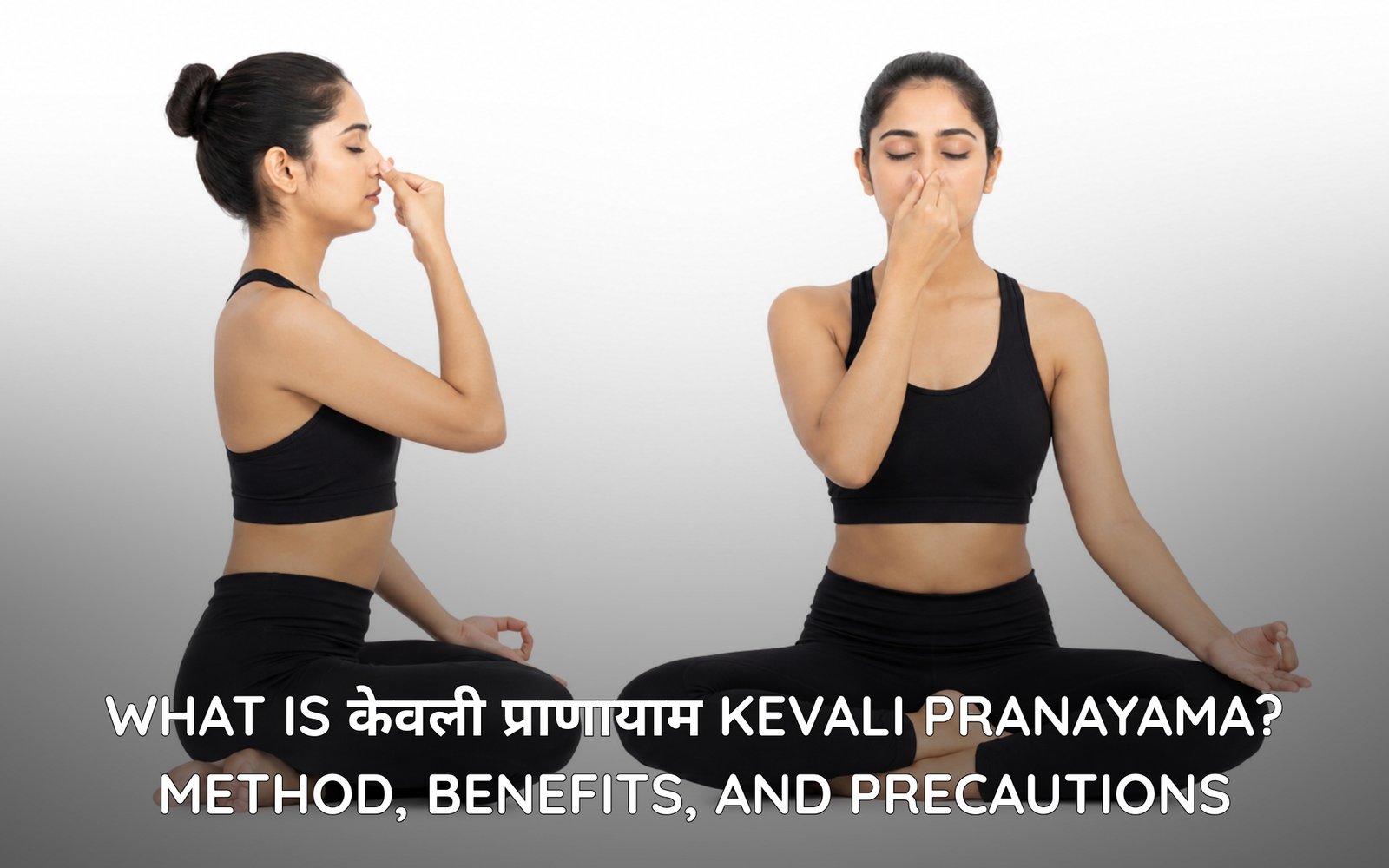
What is Kevali Pranayama केवली प्राणायाम ?
Kevali Pranayama is part of the Hatha Yoga Sadhana, adopted from the ancient text with unique philosophy. Yoga is a type of lifestyle in the ancient Yogic times, there were several ways of breathing and poses to clear the channels of the body. After the end of the era they became a remedy for the modern day people. Like other Pranayamas, Kevali Pranayama is also a unique breathing technique, which involves mindfulness.
There are different ways of healing and in India, Yoga is one of them. Out of the many Pranayama, Kevali is known for its holding capability of breath. So we do Kumbhaka in the Kevali Pranayama by retention of the breath and closing all the sphincters to create vacuum.
Is Kevala Kumbhaka and Kevali Pranayama Same?
Kevali Kumbhaka is another name of Kebvali Pranayama. Kevali Pranayama specifically points out the stage when there is an advanced stage of mindful breathing practice. On the other hand, Kevali Kumbhaka is the breath retention aspect where breathing naturally suspends without effort.
During the practice of Kevali Pranayama, the mind becomes so still that inhalation and exhalation can’t be felt. It is a deeper state of meditation, and some higher yogis consider it a bridge between pranayama and Samadhi. When breath becomes effortless for a Yogi, that is the Kevali stage.
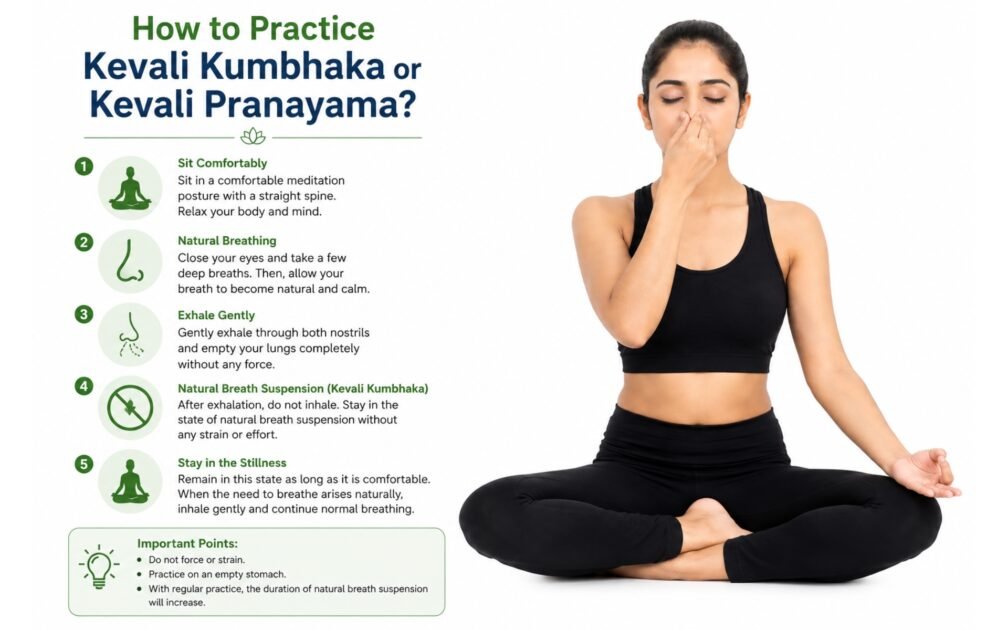
How to Practice Kevali Kumbhaka or Kevali Pranayama?
kevali Pranayama sounds so easy for everyone, it is not recommended for beginners. When you perform poses and make your body flexible without any blockage, then you can perform advanced stage Pranayamas.
Although Yogic texts considered stress and anxiety as a type of blockage, imbalance, or Dosha.
According to Gheranda Samhita, Kevali Kumbhaka can cure all Doshas and imbalances in the body. It is also performed by focusing on the doshas. Prana is held in the body, and you have to keep deep inhalation and exhalation. Here is the precise method to perform Kevali Pranayama:
- Choose a quiet place in your house, and it is better to perform kevali pranayama on an empty stomach.
- Also, it is recommended to perform all the Pranayama after the pose.
- Keep a mat, and you can sit in Padmasana, Sukhasana or Siddhsana.
- Spine should be straight, shoulder relaxe and eyes firmly closed,
- You can perform Nadi shodhana or Ujjayi Pranyama before moving into further steps.
- You have to keep a small pause between inhaling and exhaling.
- Inhale slowly and then retain your breath for some seconds, and gently release the breath.
- Don’t try to control your breath during the Pranayama.
- Now, try to enter the meditative state of relaxation. Slowly, your inner silence will deepen.
- The nervous system will become calmer and more profound, thoughts will be reduced, and you can now go into a meditative state.
What are the Benefits of the Kevali Pranayama?- Jevali Kumbhaka Benefits
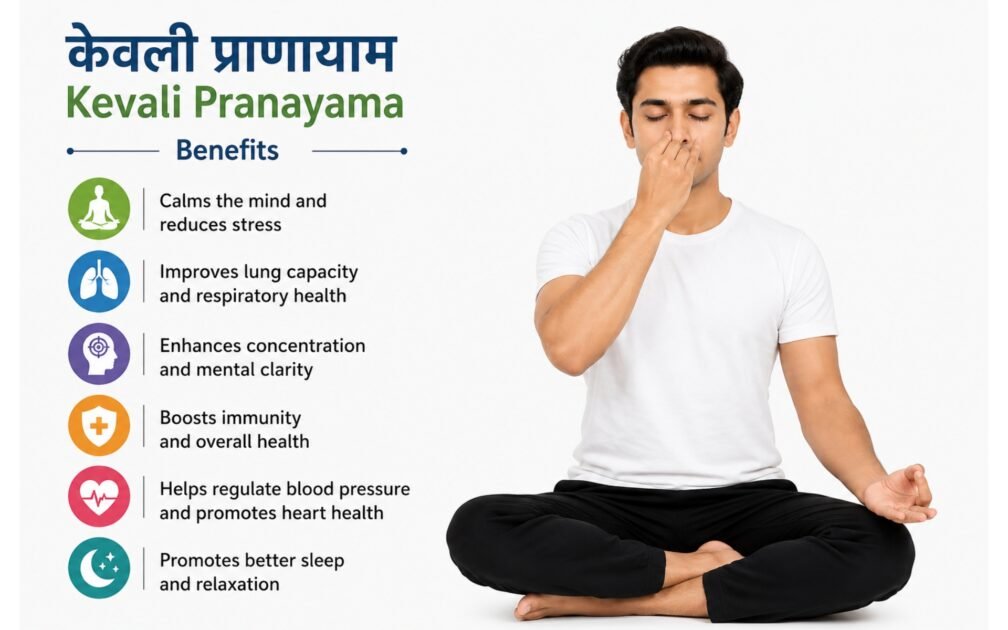
All pranayamas are performed after the poses or Asanas. It is a common saying that poses clears the passage of energy. After the process, kundalini energy can be awakened; it is the life force by which we manifest ourselves into different states. We can say that the advanced stage of pranayamas is for getting deeper into the Samadhi state. Healing is a very basic word for these Pranayamas. Here are the benefits of Kevali Pranayama:
- Kevali Kumbhaka Pranayama is practised with a still mind, and it brings a deeper state of consciousness.
- It balances the body and creates a harmonious relationship within the body.
- Prevent a wide variety of diseases and balance the Vata, Pitta, and Kapha.
- Relief from the skin disorder and balanced metabolism can be achieved.
- Increase circulation and hormonal release in the body.
- Improves concentration and focus.
- Stops the speed-moving thoughts and calms down the mind.
- Better balance between the sympathetic and parasympathetic nervous systems.
- Greater awareness and emotional stability.
Also, after practicing Kevali Pranayama, you should observe yourself; if any unusual sensation is there, then stop immediately.
What are the Contraindications of Kevali Pranayama?
The very first point is not to practice Kevali Pranayama without the presence of any guru or master. It is a deep yogic practice. If you look for the benefits just after the practice of Pranayama, then it will not be an authentic practice anymore. There are a variety of diseases that can be cured after practicing Kevali Pranayama, but you should do it with awareness:
- Those who have high blood pressure
- People who have heart disease
- Sufferers of asthma / severe breathing problems
- People suffering panic attacks / severe anxiety
- People who have had epilepsy/seizure (s)
- People who are recovering from major surgery/weakness
- A pregnant woman
- Someone not experienced with Pranayama (pranayama beginner).
However, one should be very careful with this advanced form of breath retention unless one has already mastered the most basic breathing techniques. Anyone with any medical condition related to the heart, blood pressure, or respiratory system should not practice. If they are trying any kind of advanced breath retention, unless they are supervised by a trained instructor.
Frequently Asked Questions:
1. How is Kevali Pranayama Different From Other Pranayamas?
Ans. In Kevali Pranayama, the breath is suspended by itself without being pushed out (exhaled) or pulled in (inhaled). As you enter into this higher state of consciousness through meditation, you allow yourself to breathe more lightly with almost no movement. The key difference between Kevali and other forms of pranayama (basic pranayama) is that Kevali is all about internal stillness and greater awareness than other forms of pranayama.
2. Can a beginner practice Kevali Pranayama?
Ans. Kevali Pranayama sounds so easy for everyone, it is not recommended for beginners. When you perform poses and make your body flexible without any blockage, then you can perform advanced stage Pranayamas.
3. What are the effects of Keavli Pranayama on Mind?
Ans. Practicing this technique could help soothe the racing mind, improve focus and achieve a very deep meditative state. Practicing regularly will allow the practitioner to achieve greater clarity, silence and inner harmony.
4. Is Kevali Pranayama Good for Kundalini Awakening?
Ans. The traditional yogic scriptures indicate that this practice, known as Kevali Pranayama, leads to the attainment of higher levels of consciousness and spiritual development by creating an inner calm and prompting awareness of one’s self.
Conclusion
Kevali Pranayama or Kevali Kumbhaka is a mindfulness practice. You should practice it in the presence of a master; otherwise, after being an expert. Kevali Pranayama, commonly referred to as Kevala Kumbhaka, is an advanced yogic breathing state that occurs naturally during very deep meditation, in which the breath has stopped moving on its own.
This is different from “forceful” breath retention because it develops over time as pranayama, focus on your thoughts, and self-awareness become more consistent. Kevali Pranayama has been shown to relax one’s nervous system, increase clarity of thought, and increase one’s spiritual connectedness. By practicing and being supervised properly, Kevali Pranayama can also be an extremely helpful tool for achieving inner peace or stillness, as well as greater self-awareness.
Yoga Teacher Training Courses in Rishikesh
100 Hour Yoga Teacher Training in Rishikesh
200 Hour Yoga Teacher Training in Rishikesh
300 Hour Yoga Teacher Training in Rishikesh



Leave a comment: