
- 465 Views
- 7 Min Read
- (0) Comment
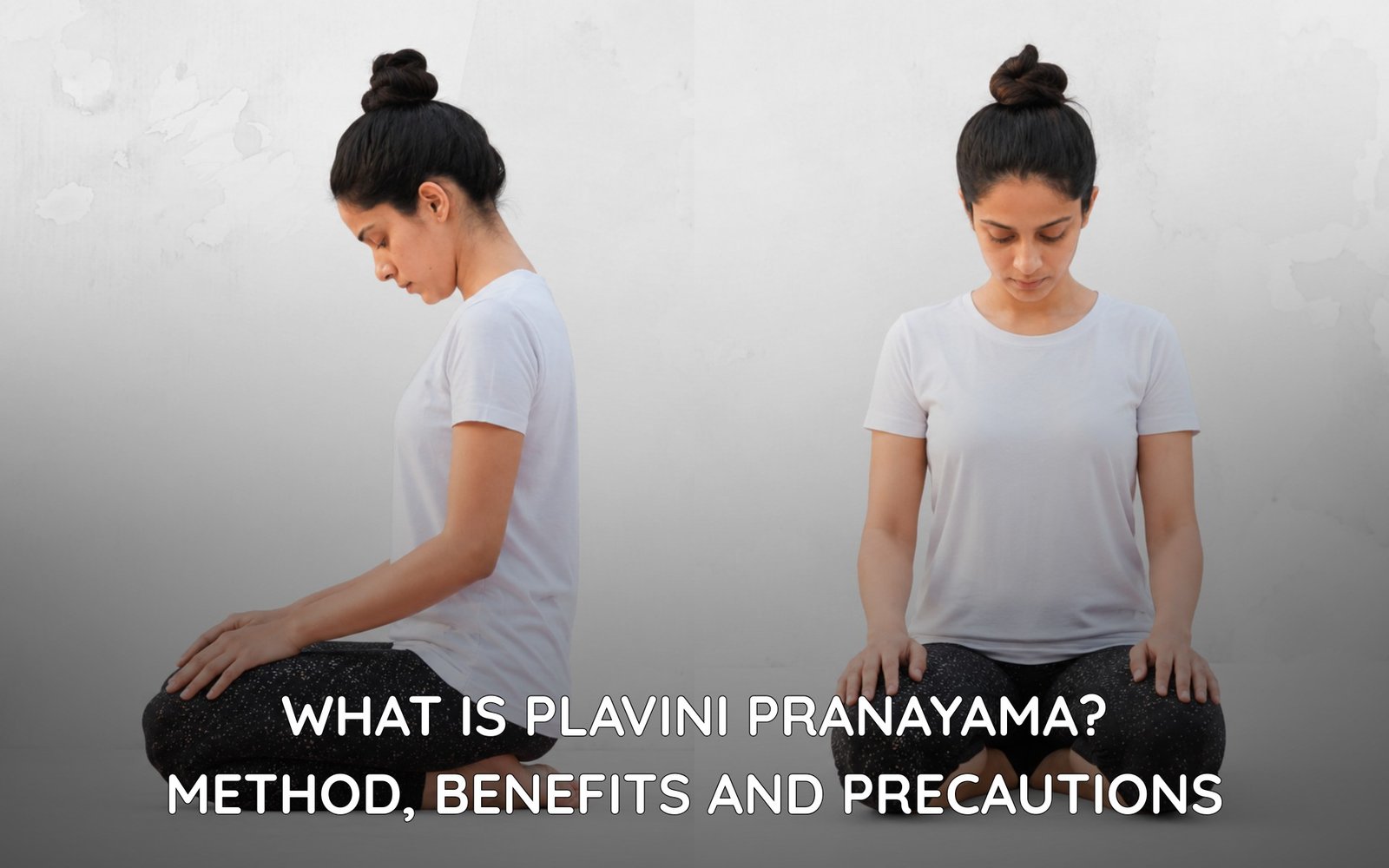
Pranayama is a soft but high-level yoga breathing technique. It is also spelled by many yoga teachers as Plavini Pranayama. The word “Plavini” relates to floating or lightness. In this, you inhale slowly and direct air to the stomach region. Thus, the body can be light and peaceful. Nevertheless, it should be learned with caution by beginners. This is a breathing technique that requires patience, control, and appropriate guidance. This guide, therefore, explains its advantages, steps, safety measures, and pitfalls in very simple terms.
What is Plavini Pranayama?
Plavini Pranayama is a yogic technique of breathing. It pays attention to deep breathing and regulates air intake. When it comes to traditional yoga, individuals associate this practice with lightness, digestion, and calmness.
But you must not make it just like the regular deep breathing. It is a practice that entails air control in a distinctive manner. Consequently, you must begin at a slow pace and not force.
In yoga, breath control is known as pranayama. It constitutes a significant portion of a significant number of yoga systems. According to health sources, yoga usually involves a combination of postures, breathing exercises, and meditation.
Why Do People Practice Plavini Pranayama?
Individuals engage in Plavini Pranayama in order to feel calm, steady, and light. In addition, it is employed by several yoga students to enhance their awareness of the breath. As it requires slow breathing, it can possibly assist the mind to slow down.
Besides, this practice is educative on how to have better control of the breath. You can have better control over stress when you are in control of your breath. You must, however, practice it safely. Advanced breathing is something you should never rush into.
The National Center of Complementary and Integrative Health recommends against extreme yoga practices and forceful breathing for novice yoga learners. It further advises that one should learn yoga under someone who has been trained to teach yoga.
Benefits of Plavini Pranayama
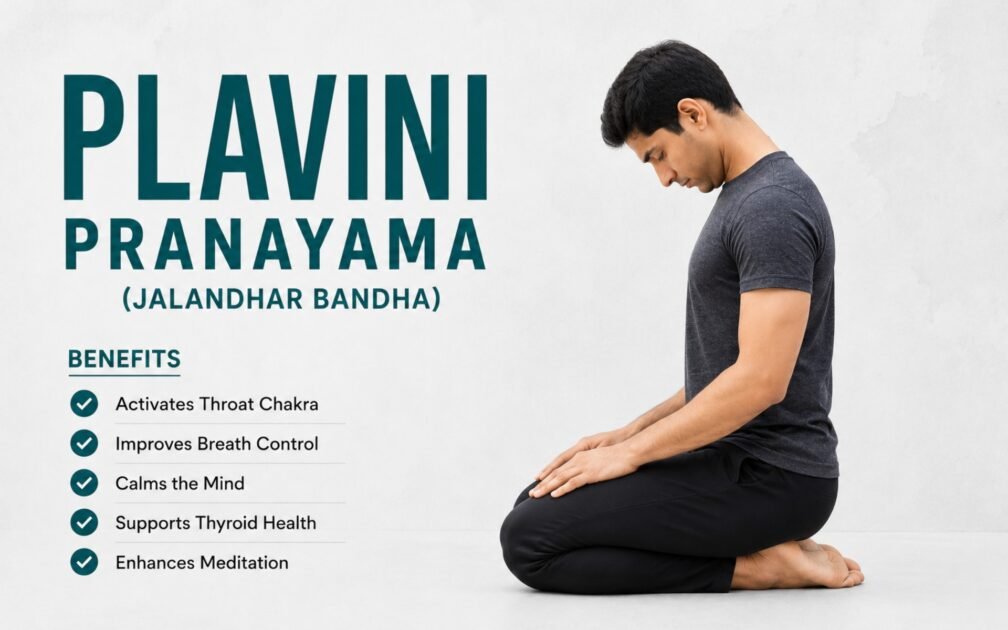
Plavini Pranayama can help the body and mind in various ways. Nevertheless, outcomes may vary with an individual. Besides, it is not a practice that takes the place of medical care. Thus, it should be considered an exercise of wellness, rather than a medicine.
- Supports Calm Breathing
Plavini Pranayama promotes mindful and slow breathing. Consequently, your body might become more relaxed. There is also a possibility that your mind may not be so scattered. Breathing slowly allows you sufficient time to relax. Thus, the practice can facilitate tranquility in a hectic day.
- Helps Improve Breath Awareness
This will train you to be aware of your breathing pattern. A lot of individuals breathe rapidly without being aware of it. But Plavini Pranayama requests you to breathe mindfully. And there you can know how your breath comes. This awareness can aid you in yoga, meditation, and day-to-day stress.
- May Support Digestion Comfort
The common yoga practices tend to relate Plavini Pranayama to the stomach location. Because the practice entails air movement to the belly, there are learners who use it to be aware of their digestive system. But you ought not to do that after eating. Also, people with gastric problems should ask an expert first.
- Builds Patience and Focus
Plavini Pranayama should be practiced slowly. It is not something that you can learn in a single day. Thus, it develops patience. It also trains your attention as you have to take each breath very carefully. In the long run, this may help us focus better when we are meditating and doing yoga.
- Supports a Light Feeling
Several traditional yoga texts and teachers may refer to Plavini as a practice that is associated with lightness. Nevertheless, this can be simply understood by beginners. Slow breathing may reduce the tension felt by the body. The mind also might be clearer. Thus, the tradition can establish a light and tranquil ambiance.
Who Should Practice Plavini Pranayama?
This practice can be attempted by healthy adults who have some experience in yoga. But first, simple breathing techniques should be learned by complete beginners. These can be belly breathing, equal breathing, and gentle nasal breathing.
Plavini Pranayama should be practiced by an experienced yoga teacher, where possible. This is important since the method employs breath control and stomach awareness. It is possible to fix your errors in the early days with a teacher.
You may try this practice if:
- You already do some yoga breathing.
- You may sit and rest for a few minutes.
- You know slow nasal breathing.
- You do not impose your breathing.
When you begin to be uncomfortable, you can stop.
Who Should Avoid Plavini Pranayama?
There are individuals who are not supposed to engage in this practice, or anyone who wants to consult with a doctor. This involves individuals who have serious breathing problems, heart issues, uncontrolled blood pressure, severe acidity, ulcers, recent surgery, pregnancy, or dizziness issues.
Also, do not do this when one is sick, or has a fever, cold, or flu, has a stuffed nose, or is congested in the chest. Prudent advice to pranayama warns individuals against straining breath during disease or respiratory distress.
You should stop immediately if you feel:
- Dizziness
- Chest tightness
- Nausea
- Pain
- Anxiety
- Breathlessness
- Strong stomach pressure
Best Time to Practice Plavini Pranayama
Most people work best in the mornings. Your stomach remains empty at that time, and your mind is fresh. You may, however, also train in the evening before dinner.
There should always be a distance between food. Wait at least three or four hours after a large meal. In addition, select a clean and quiet (noisy) location. Being in fresh air will assist you in breathing better and remaining relaxed.
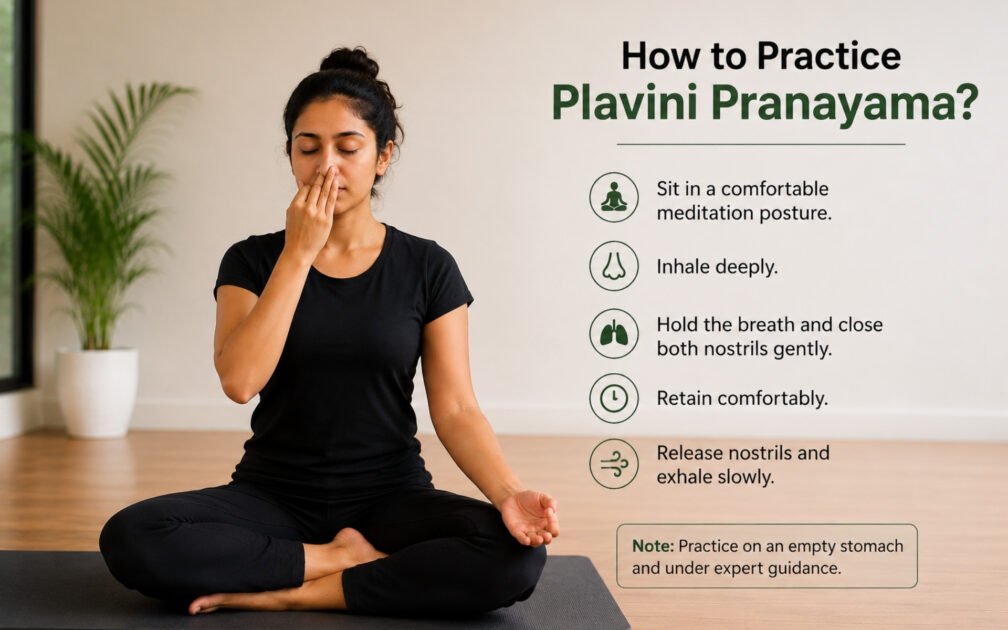
How to Practice Plavini Pranayama Safely?
Begin with a brief drill. Be not perfect. Rather, concentrate on comfort and normal breathing. Sit tall as well and ensure that your body is relaxed.
Step 1: Sit in a Comfortable Position.
Sit on a yoga mat, a folded blanket, or a chair. Keep your back straight. Shoulders and face: Relax. Place your hands on your knees. Then close your eyes tenderly. It is best first to take several normal breaths.
Step 2: Breathe Your Natural Breath.
Take a breath now, through your nose. Do not do anything in haste. Simply observe breath. Sense the incoming and outgoing air. Then allow your breathing to slow down. Relax your jaw and keep your body relaxed.
Step 3: Slow Deep Inhale.
Slow deep breathing in through the nose. Lightly stretch your chest and belly. Never press air in your body. Instead, breathe smoothly. Lighten and moderate the breath.
Step 4: Guide Awareness Toward the Belly
Now, bring your attention to the stomach area. Other conservative practices explain the slow swallowing of air. But novices must not be forced. So, only practice this step with a trained teacher. Maintain a relaxed, steady body posture.
Step 5: Hold Only When Comfortable.
Breath retention is one of the advanced practices. Nevertheless, the novices are encouraged to avoid long holds. Should your teacher permit a brief suspension, make it extremely gentle. Never hold your breath under pressure. Also, exhale immediately when there is discomfort.
Step 6: Exhale Slowly
Breath out via the nose in a gentle manner. Allow the body to relax. Relax the belly. Then, go back to normal breathing after a few seconds. Repeat only a few rounds in the beginning.
Step 7: Rest After Practice
Take one or two minutes of quiet after practice. Be aware of your breath and body. Then, close your eyes gradually. Stand not up haste. This brief relaxation helps your body relax.
The Closing Note
Plavini Pranayama is a special breathing that may help to stay calm, focused and directed to the breath. But it is not the most suitable first pranayama for all beginners. Therefore, begin with the basic breathing initially. Then, teach Plavini slowly with safe instructions.
In brief, train softly, keep your stomach vacant, and do not strain. And, listen to your body each time. With a mindful practice, Plavini Pranayama can be a relaxing aspect of your yoga practice.
FAQ
What is Plavini Pranayama?
Plavini Pranayama is a yoga breathing technique that is associated with lightness and breath control. It includes gradual breathing and belly awareness. It must be taught to beginners with caution and hopefully by a qualified yoga instructor.
Can beginners practice Plavini Pranayama?
It can be learned by beginners who have to learn basic breathing techniques. They should not, however, force, hold long breaths, or swallow air without instructions. The practice can be safer with the help of a trained teacher.
When should I practice Plavini Pranayama?
Morning is the best as the stomach remains empty. You may have a rehearsal too, before dinner. Never practice, however, just after meals, when you are sick, or when you are weak or feel dizzy
Yoga Teacher Training Courses in Rishikesh
100 Hour Yoga Teacher Training in Rishikesh
200 Hour Yoga Teacher Training in Rishikesh
300 Hour Yoga Teacher Training in Rishikesh


Leave a comment: